
Contents
Overview
The activated sludge process is a cornerstone of modern wastewater treatment, employing a carefully cultivated community of microorganisms to biologically degrade organic pollutants. This aerobic process involves aerating wastewater in the presence of these microbes, which form flocs – dense clumps of bacteria, protozoa, and other organisms. These flocs effectively capture and metabolize dissolved and suspended organic matter. Following aeration, the mixture flows to a settling tank where the flocs settle out as 'activated sludge,' allowing treated water to be decanted. A portion of this settled sludge is recycled back to the aeration tank to maintain a high concentration of active biomass, while the excess sludge is removed for further processing and disposal. Developed in the early 20th century, it remains a dominant technology globally, treating billions of gallons of wastewater daily and playing a critical role in public health and environmental protection.
🎵 Origins & History
The activated sludge process was developed in the early 20th century, driven by a pressing need to manage urban sewage and prevent waterborne diseases. Early experiments by figures like Dr. Travis at the LCC’s Crossness Works contributed to the understanding of biological wastewater treatment. The term 'activated sludge' itself refers to the biologically active floc that develops and is recycled within the system, a testament to the microbial communities' crucial role.
⚙️ How It Works
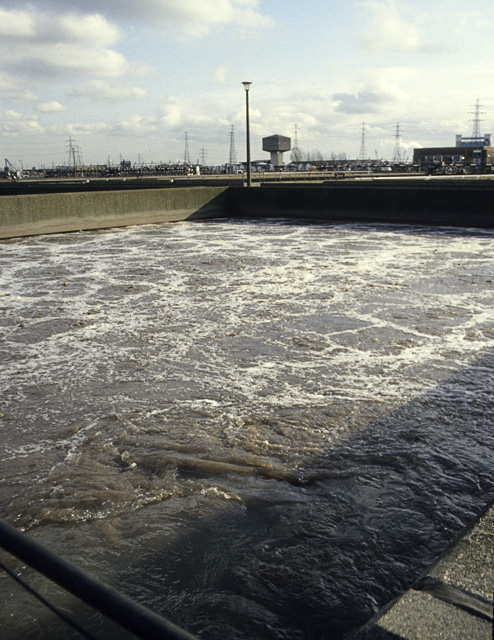
At its core, the activated sludge process is a carefully orchestrated biological oxidation. Wastewater enters an aeration tank where it is mixed with a high concentration of suspended microbial flocs, known as activated sludge. Air or pure oxygen is continuously supplied to this tank, creating an aerobic environment that fuels the metabolic activity of the microorganisms. These microbes consume dissolved and suspended organic matter in the wastewater as their food source, converting it into carbon dioxide, water, and new microbial cells. Following aeration, the mixed liquor flows into a secondary clarifier (settling tank), where gravity separates the settled sludge from the treated effluent. A portion of this settled sludge, rich in active biomass, is returned to the aeration tank to maintain the process's efficiency, while the surplus sludge is removed for disposal.
📊 Key Facts & Numbers
The activated sludge process is a dominant technology globally. A typical activated sludge plant can achieve high removal of biochemical oxygen demand (BOD) and suspended solids. The energy consumption for aeration alone can account for a significant portion of a plant's total operational costs.
👥 Key People & Organizations
Key figures in the development of the activated sludge process include Edward Ardern and William T. Lockett, whose 1913 publication from the Davyhulme Sewage Works in Manchester is considered seminal. Early pioneers like Dr. Travis also contributed significantly to the understanding of biological wastewater treatment. Modern advancements are often driven by engineering firms and research institutions such as Black & Veatch, Jacobs Engineering Group, and universities like IIT Madras, which focus on optimizing aeration efficiency, nutrient removal, and sludge management. Organizations like the Water Environment Federation (WEF) play a crucial role in disseminating best practices and research findings within the industry.
🌍 Cultural Impact & Influence
The activated sludge process has profoundly shaped urban development and public health by enabling the safe disposal of wastewater, drastically reducing waterborne disease outbreaks like cholera and typhoid that plagued cities in the 19th century. Its widespread adoption has allowed for denser urban populations and the protection of rivers, lakes, and coastal waters from pollution. The visual of a wastewater treatment plant, once a symbol of urban blight, has become a more integrated part of municipal infrastructure, often featuring advanced aeration tanks and clarifiers that are engineering marvels. The concept of 'activated' biomass has also permeated other biological industries, influencing bioremediation and industrial fermentation techniques.
⚡ Current State & Latest Developments
Current developments in activated sludge technology focus heavily on energy efficiency and enhanced nutrient removal. Innovations include advanced aeration control systems that dynamically adjust oxygen supply based on real-time monitoring. Membrane bioreactors (MBRs), which integrate membrane filtration with activated sludge, are gaining traction for producing higher quality effluent suitable for reuse, particularly in space-constrained urban areas. Research is also intensifying on optimizing microbial communities for the removal of emerging contaminants like pharmaceuticals and microplastics, moving beyond traditional BOD and nitrogen removal. The integration of artificial intelligence and internet-of-things for process control and predictive maintenance is also a significant trend.
🤔 Controversies & Debates
A persistent controversy surrounds the energy intensity of the activated sludge process, particularly the aeration stage, which accounts for a substantial portion of a treatment plant's operational budget and carbon footprint. Critics argue that alternative technologies, or significant upgrades to existing ones, are needed to meet increasingly stringent environmental regulations and climate goals. Another debate centers on the management and disposal of the large volumes of sludge produced; concerns about the presence of pharmaceuticals, heavy metals, and microplastics in biosolids (treated sludge) used as fertilizer remain a significant challenge. The cost of implementing and maintaining advanced activated sludge systems, especially MBRs, also presents a barrier for many municipalities, particularly in developing nations.
🔮 Future Outlook & Predictions
The future of activated sludge likely involves greater integration with resource recovery. Technologies are emerging to capture biogas (methane) from anaerobic digestion of waste sludge for energy generation, making plants net energy producers. Further advancements in biotechnology may lead to engineered microbial consortia specifically designed to target recalcitrant pollutants or recover valuable resources like phosphorus. The development of more compact and modular activated sludge systems, potentially utilizing aerobic granular sludge or MBRs, will be crucial for decentralized treatment and water reuse applications. Expect increased automation and data analytics to optimize performance and reduce operational costs, pushing towards 'smart' wastewater treatment plants.
💡 Practical Applications
The primary application of the activated sludge process is in the secondary treatment of municipal wastewater, removing dissolved and suspended organic matter. It is also widely used in industrial wastewater treatment, handling effluents from sectors like food processing, pulp and paper, and petrochemicals, often with modifications to suit specific pollutant profiles. Specialized configurations, such as sequencing batch reactors (SBRs) and membrane bioreactors (MBRs), are employed for smaller flows, higher effluent quality requirements, or where space is limited. The process is fundamental to achieving compliance with environmental discharge standards and protecting receiving water bodies from pollution.
Key Facts
- Category
- technology
- Type
- topic