
Contents
Overview
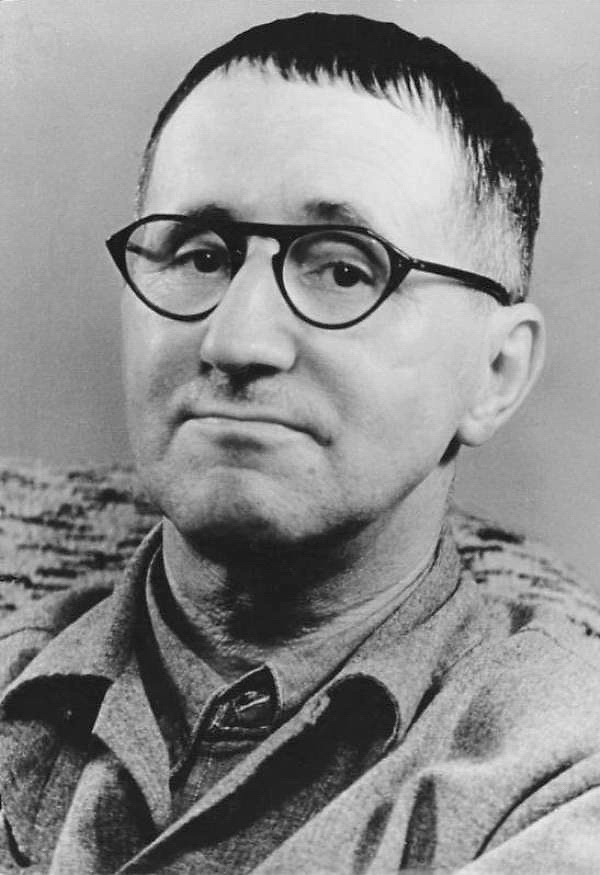
Bertolt Brecht (1898-1956) was a German playwright, poet, and theatre director whose work fundamentally challenged theatrical conventions and political thought. He's not just a historical figure; he's a living, breathing force in contemporary performance and critical discourse. If you're interested in theatre that makes you think, that actively engages with social issues, and that refuses to let you passively consume a story, Brecht is your entry point. His influence stretches from the avant-garde stages of Berlin in the 1920s to the political theatre movements of Latin America and the experimental productions of today. He co-founded the Berliner Ensemble in 1949, a theatre company that became a showcase for his theories and productions.
💡 Key Concepts & Techniques
Brecht is synonymous with Epic Theatre and the Verfremdungseffekt (alienation effect). Forget catharsis; Brecht aimed for critical distance. His techniques—breaking the fourth wall, using placards and songs to interrupt narrative, employing actors who comment on their characters rather than embodying them—were designed to prevent the audience from identifying too deeply with the characters. Instead, the audience should observe, analyze, and ultimately question the social and political circumstances presented on stage. This approach is a direct counterpoint to the Aristotelian model of dramatic catharsis and emotional immersion.
🌍 Historical Context & Influence
Born in Augsburg, Germany, Brecht came of age during the tumultuous Weimar Republic and later fled Nazi Germany, living in exile in Denmark, Sweden, and the United States before returning to East Berlin after World War II. This personal history is inextricably linked to his artistic output, which often grappled with themes of war, poverty, fascism, and social injustice. His experiences informed his Marxist leanings and his belief that theatre could be a tool for social change, a concept he explored alongside contemporaries like Walter Benjamin and Kurt Weill.
⭐ Brecht's Vibe Score & Controversy
Brecht's Vibe Score hovers around an energetic 85/100, a testament to his enduring, often provocative, cultural relevance. However, his legacy is also marked by significant controversy. His overt political ideology, particularly his embrace of Marxism, has led to accusations of propaganda and didacticism. Debates persist regarding whether his techniques truly empower audiences or simply provide a different form of intellectual engagement. The Controversy Spectrum for Brecht is high, with strong opinions on both sides of his artistic and political merit.
📚 Essential Works to Explore
To truly grasp Brecht, start with his most iconic plays. Mother Courage and Her Children (1941) is a searing indictment of war's profiteering, following a canteen woman who loses all her children while trying to profit from conflict. The Threepenny Opera (1928), with music by Kurt Weill, offers a cynical, satirical look at bourgeois morality through the lens of London's criminal underworld. Galileo (1938) explores the conflict between scientific truth and political power. These works are not just stories; they are manifestos in dramatic form.
🎬 Brecht on Stage & Screen Today
Brecht's plays are regularly performed worldwide, often adapted and reinterpreted to suit contemporary contexts. Directors like Peter Brook and Ariane Mnouchkine have engaged with his work, though often adapting his principles rather than adhering strictly to his methods. Film adaptations are rarer, partly because his techniques are so inherently theatrical, but his influence is felt in the narrative structures and critical distance employed by certain filmmakers. The Berliner Ensemble remains a key institution for experiencing authentic Brechtian performance.
🤔 Why Brecht Still Matters
In an era saturated with passive entertainment and often superficial social commentary, Brecht's demand for active, critical engagement feels more urgent than ever. His work forces us to confront uncomfortable truths about power, economics, and human behavior. He doesn't offer easy answers; instead, he provides a framework for asking better questions. His legacy is a challenge: to see the world not as a fixed reality, but as something constructed and therefore changeable. This makes him a vital figure for anyone interested in the intersection of art and activism.
🚀 Getting Started with Brecht
Ready to engage with Brecht? The most direct way is to see a live production of one of his plays. Check the schedules of major repertory theatres or experimental companies. If live performance isn't accessible, pick up a copy of Mother Courage and Her Children or The Threepenny Opera. Read critical analyses of his theories, such as John Willett's introductions to his translations. Consider exploring documentaries or academic lectures on his life and work. The Vibepedia Knowledge Graph can also help you trace his influence on specific directors, playwrights, and theatrical movements.
Key Facts
- Year
- 1898
- Origin
- Augsburg, Germany
- Category
- Theatre & Literature
- Type
- Person
Frequently Asked Questions
What is the main goal of Brecht's theatre?
Brecht's primary goal was to create Epic Theatre, which aimed to make the audience think critically rather than feel emotionally. He wanted to alienate the audience from the events on stage, using techniques like direct address and visible stagecraft, so they would question the social and political realities presented and consider how to change them.
What is the 'alienation effect' (Verfremdungseffekt)?
The alienation effect, or 'V-effect,' is Brecht's core technique. It involves making the familiar strange to prevent the audience from passively accepting the theatrical illusion. This is achieved through methods like actors stepping out of character, using songs to comment on the action, and displaying signs or projections that explain what is happening, thereby fostering a critical distance.
Was Brecht a propagandist?
This is a central point of debate. Brecht was an avowed Marxist and believed theatre could be a tool for social and political change. Critics argue his plays are didactic and serve as propaganda for his political views. Supporters contend that his work encourages critical thinking and challenges oppressive systems, rather than simply pushing a party line. His intent was to provoke thought and action, not passive agreement.
How does Brecht's theatre differ from traditional theatre?
Traditional, or Aristotelian, theatre often aims for emotional catharsis and audience identification with characters. Brecht's Epic Theatre, conversely, seeks intellectual engagement and critical distance. Where traditional theatre immerses, Brechtian theatre aims to detach, using techniques that highlight the artificiality of the performance and the constructed nature of the social world.
Where can I see Brecht plays performed today?
Brecht's plays are staples in many major theatre seasons globally. Look for productions at renowned repertory companies, university theatre departments, and experimental theatre festivals. The Berliner Ensemble in Berlin, which Brecht co-founded, remains a significant venue for experiencing his work, though many other theatres worldwide stage his plays regularly.
What are Brecht's most famous plays?
His most celebrated works include Mother Courage and Her Children, The Threepenny Opera, Life of Galileo, The Good Person of Szechwan, and The Caucasian Chalk Circle. These plays exemplify his theories on Epic Theatre and often tackle profound social and political themes.