
Contents
Overview
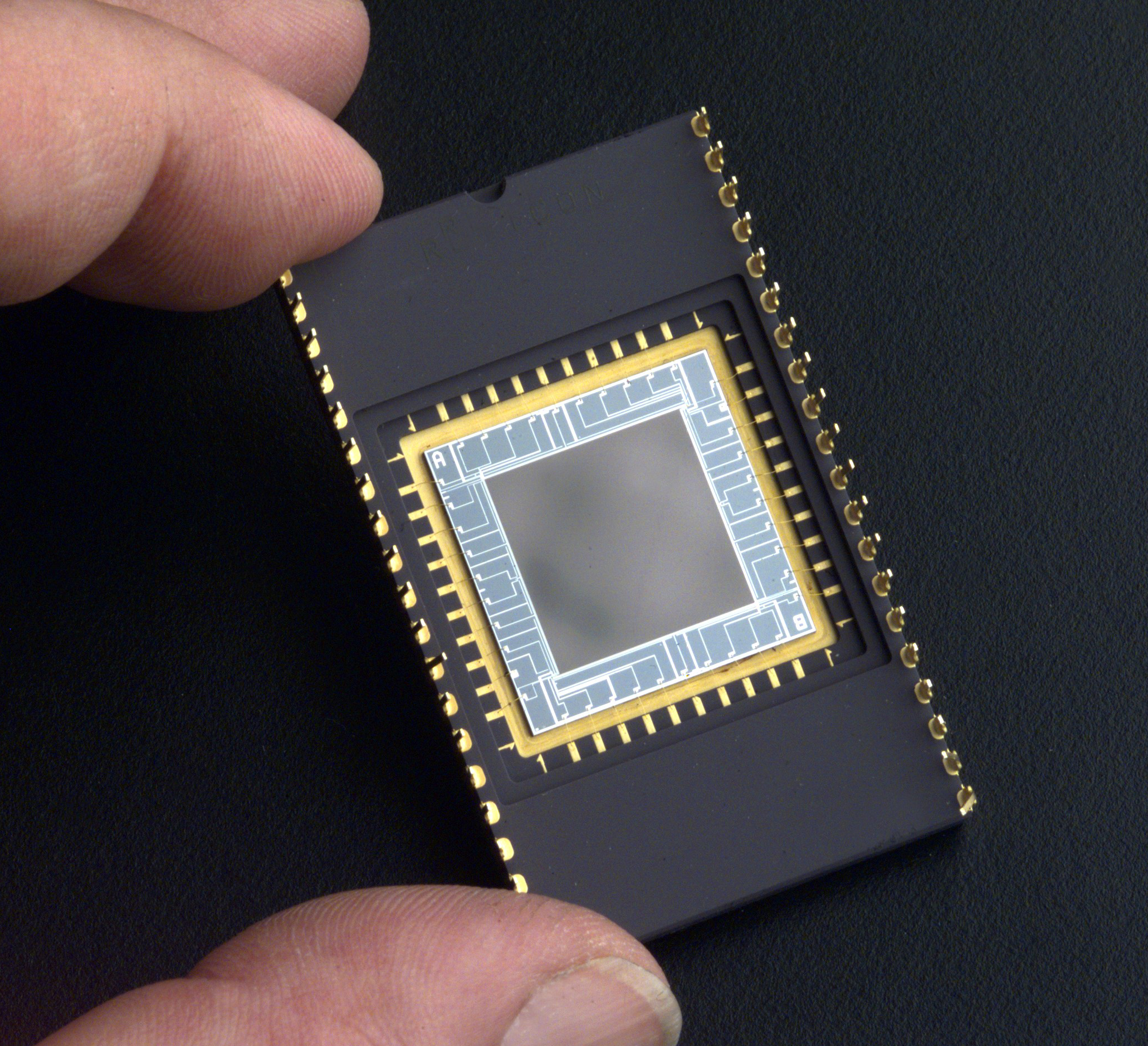
Charge-coupled devices (CCDs) are semiconductor-based integrated circuits that revolutionized digital imaging by enabling the conversion of light into electrical signals with unprecedented fidelity. These devices consist of an array of linked capacitors, where each capacitor, representing a pixel, stores an electrical charge proportional to the light it receives. Through a carefully orchestrated process, these charges are then 'coupled' and transferred across the chip to be read out and digitized. First conceived in 1969 at Bell Labs, CCDs rapidly moved from theoretical concepts to practical applications, becoming the dominant sensor technology in everything from astronomical telescopes and medical imaging equipment to early digital cameras. Despite the rise of competing technologies like CMOS sensors, CCDs continue to be prized for their exceptional sensitivity, low noise, and high dynamic range, particularly in demanding scientific and professional fields.
🎵 Origins & History
The genesis of the charge-coupled device can be traced to a pivotal moment in 1969 at Bell Labs, where Willard Boyle and George E. Smith were exploring semiconductor technologies for video telephone applications. Their groundbreaking insight was to use a series of MOS capacitors to store and transfer electrical charge packets, akin to a 'bucket brigade' for electrons. This concept, detailed in their seminal 1970 paper, 'Charge-Coupled Semiconductor Devices,' laid the foundation for a new era of electronic imaging. Early development was rapid, with CCDs quickly finding favor in applications demanding high image quality, such as astronomical observation and medical imaging, where their superior performance over nascent CMOS sensors was evident.
⚙️ How It Works
At its core, a CCD operates by converting photons into electrons within a silicon substrate. Each pixel on the CCD is essentially a MOS capacitor. When light strikes the silicon, it generates electron-hole pairs; the electrons are collected and stored in a potential well beneath the capacitor. During readout, a sequence of precisely timed voltage pulses applied to adjacent electrodes creates a shifting potential landscape, causing the charge packets from each pixel to be transferred sequentially across the device, row by row, to an output amplifier. This 'charge coupling' process is remarkably efficient, allowing for very low noise and high signal integrity, a hallmark of CCD performance. The final charge packet is then converted into a voltage, amplified, and digitized by an analog-to-digital converter.
📊 Key Facts & Numbers
The impact of CCDs on imaging is quantifiable. Early Hubble Space Telescope instruments relied on CCDs to capture images of distant galaxies, revealing details previously unseen. In the medical field, CCDs enabled advancements in X-ray imaging and endoscopy, improving diagnostic accuracy. Even today, high-end scientific CCDs can achieve quantum efficiencies exceeding 95%, meaning nearly every photon that strikes a pixel is converted into a measurable signal.
👥 Key People & Organizations
The invention of the CCD is credited to Willard Boyle and George E. Smith. Key organizations instrumental in CCD development and commercialization include Eastman Kodak, which heavily invested in CCD research for its photographic products, and Texas Instruments, another early pioneer. CCD Cameras Inc. and Photometrics Inc. were among the companies that brought CCD technology to scientific markets, providing high-performance cameras for research. Sony became a dominant force in CCD manufacturing, supplying sensors for a vast array of consumer and professional electronics.
🌍 Cultural Impact & Influence
CCDs fundamentally reshaped visual culture and scientific inquiry. The ability to capture images digitally, without film, democratized photography and paved the way for the digital camera revolution, fundamentally altering industries from journalism to personal communication. In astronomy, CCDs replaced photographic plates, enabling longer exposures and more precise photometric measurements, leading to discoveries like exoplanets and detailed mapping of nebulae. The medical field saw improved diagnostic capabilities through higher-resolution and lower-noise imaging. The ubiquity of digital images today, from social media feeds to scientific journals, owes an immense debt to the foundational work on CCDs.
⚡ Current State & Latest Developments
While CMOS sensors have largely supplanted CCDs in consumer electronics due to their lower power consumption and integration capabilities, CCDs remain vital in specific high-performance niches. Manufacturers like ON Semiconductor (formerly part of Fairchild) and Sony Semiconductor Solutions continue to produce advanced CCDs. Recent developments include back-illuminated CCDs, which significantly boost light-gathering efficiency by thinning the silicon substrate and placing the circuitry behind the photosensitive area. Innovations also focus on reducing readout noise and increasing frame rates for specialized scientific and industrial applications, ensuring CCDs remain competitive where ultimate image quality is paramount.
🤔 Controversies & Debates
The primary debate surrounding CCDs centers on their inherent limitations compared to CMOS sensors. CCDs typically require higher operating voltages and consume more power, making them less suitable for battery-powered devices. Their charge transfer process can also be slower than the parallel readout of CMOS pixels, limiting frame rates in some applications. Furthermore, the manufacturing process for CCDs is generally more complex and expensive than for CMOS sensors. Despite these drawbacks, the debate often concludes that for applications demanding the absolute lowest noise and highest dynamic range, such as in deep-space telescopes or high-end scientific microscopy, CCDs still hold a significant advantage, justifying their continued use and development.
🔮 Future Outlook & Predictions
The future of CCDs appears to be one of specialized dominance rather than broad market saturation. Expect continued innovation in back-illuminated architectures and advanced noise reduction techniques, pushing the boundaries of sensitivity and low-light performance. Quantum dot integration with CCD technology is an area of research that could further enhance spectral response. While CMOS will undoubtedly continue its reign in consumer devices, CCDs are poised to remain indispensable in fields like astrophysics, biotechnology, and industrial inspection where the pursuit of perfect image fidelity is non-negotiable. The development of electron-multiplied CCDs (EMCCDs) also points to future pathways for ultra-sensitive imaging.
💡 Practical Applications
CCDs are indispensable in a wide array of practical applications. In astronomy, they are the workhorse sensors for ground-based and space telescopes, capturing faint light from distant celestial objects. Medical imaging relies heavily on CCDs for applications like digital radiography, fluoroscopy, and specialized microscopy, enabling precise diagnosis and research. Industrial inspection systems use CCDs for quality control, detecting microscopic defects in manufacturing. Scientific research across disciplines, from particle physics experiments to biological imaging, employs CCDs for their unparalleled sensitivity and low noise. Even in high-end surveillance and document scanning, CCDs offer superior image clarity.
Key Facts
- Category
- technology
- Type
- technology