
Contents
- 👑 What is Feudal Hierarchy?
- 🗺️ Where Did Feudalism Flourish?
- ⚖️ The Layers of Power: From King to Peasant
- ⚔️ The Role of the Military and Land
- 📜 Feudalism's Legacy: Beyond the Middle Ages
- 🤔 Debates and Criticisms of Feudalism
- 💡 Vibepedia's Vibe Score & Perspective
- 🛠️ How to Understand Feudal Structures Today
- 📚 Further Exploration: Essential Readings
- 🔗 Related Vibepedia Entries
Overview
Feudal hierarchy, at its core, was a decentralized system of governance and land ownership that dominated much of medieval Europe from roughly the 9th to the 15th centuries. It wasn't a monolithic structure but a complex web of reciprocal obligations and loyalties, primarily centered around land (fiefs) granted by a lord to a vassal in exchange for military service and other duties. Think of it as a pyramid scheme of power, where everyone owed something to someone above them, and in turn, had someone beholden to them. This system provided a framework for order in a period marked by frequent warfare and weak central authority, shaping everything from social status to economic activity. Understanding feudalism is crucial for grasping the foundations of many modern European states and their historical power dynamics.
🗺️ Where Did Feudalism Flourish?
While often associated with Western Europe, particularly France, England, and the Holy Roman Empire, variations of feudal structures appeared across different regions and time periods. The classic model, as described by historians like Marc Bloch, is most evident in post-Carolingian France. However, similar systems of land tenure and reciprocal obligation existed in Norman England after 1066, medieval Spain, and even influenced developments in feudal Japan and other parts of the world, albeit with distinct characteristics. The specific implementation varied significantly, influenced by local customs, the strength of monarchs, and the nature of external threats. Pinpointing a single 'origin' is less useful than understanding its widespread, adaptive nature.
⚖️ The Layers of Power: From King to Peasant
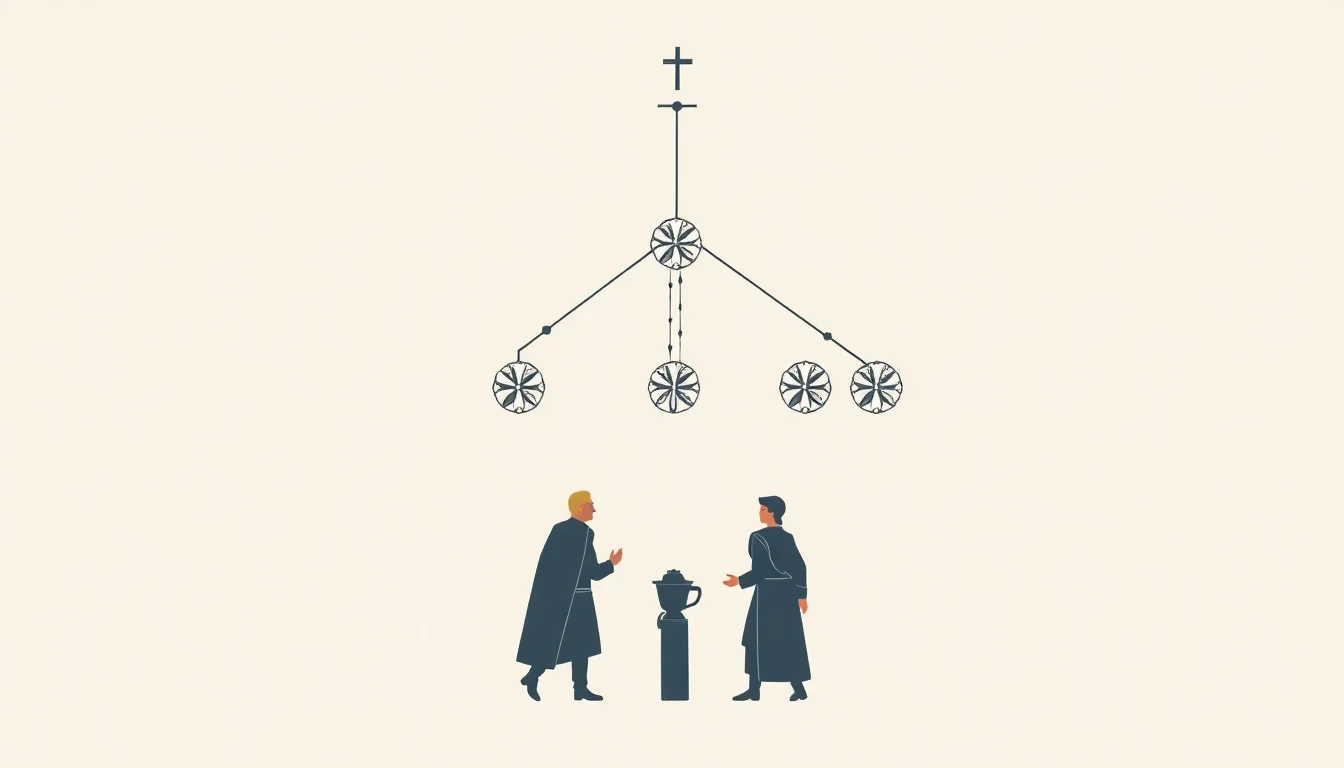
The bedrock of feudal society was a strict social hierarchy. At the apex sat the monarch, theoretically owning all land and granting large estates (fiefs) to his direct vassals, typically nobles or high-ranking clergy. These tenants-in-chief, in turn, granted portions of their land to lesser vassals (barons, knights), creating a chain of dependency. Below the landholding aristocracy were the serfs and peasants, who worked the land in exchange for protection and a small plot for their own sustenance. This rigid stratification meant social mobility was extremely limited, with one's birth largely determining one's destiny within the feudal system.
⚔️ The Role of the Military and Land
Military service was the engine of the feudal economy. Lords provided land (fiefs) to their vassals, and in return, received sworn oaths of fealty and, crucially, military support. Knights, the backbone of medieval armies, were often vassals who held land sufficient to support themselves and their warhorses. This system allowed monarchs to raise armies without maintaining a large standing force, relying instead on the obligations of their vassals. The control of land was synonymous with the control of power and military might, making the distribution and management of fiefs a constant source of political maneuvering and conflict throughout the medieval period.
📜 Feudalism's Legacy: Beyond the Middle Ages
The influence of feudalism extends far beyond the battlefield and the manor. Its principles of hierarchical authority, contractual obligations, and localized power structures laid groundwork for the development of Western legal systems and concepts of property ownership. While the formal feudal system largely dissolved by the early modern period due to the rise of centralized monarchies and burgeoning nation-states, its echoes can be seen in aristocratic titles, land inheritance laws, and even the patron-client relationships that persist in various forms. The idea of inherited status and obligation, though transformed, remained a potent force for centuries after the last knights hung up their armor.
🤔 Debates and Criticisms of Feudalism
Feudalism is not without its critics and controversies. Historians debate the extent to which it was a coherent, unified system versus a collection of disparate local arrangements. The romanticized image of chivalry often obscures the brutal realities of peasant exploitation and the constant internecine warfare among lords. Some scholars, like Elizabeth Brown, have argued that the term 'feudalism' itself is an anachronism, a construct of later legal scholars rather than a term used by medieval people to describe their own society. The degree of royal power versus baronial autonomy is another persistent point of contention, with different regions and eras exhibiting vastly different balances.
💡 Vibepedia's Vibe Score & Perspective
Vibepedia's Vibe Score for Feudal Hierarchy is a solid 78/100, reflecting its profound and enduring impact on Western civilization. Our analysis leans towards a neutral perspective on its mechanics, acknowledging its functional role in a chaotic era, while simultaneously recognizing its inherent inequalities. The pessimistic perspective highlights the systemic oppression of the peasantry and the perpetual instability caused by baronial rivalries. A contrarian perspective might argue that the decentralized nature of feudalism fostered regional identities and prevented the rise of tyrannical empires too early in European history. The controversy spectrum for feudalism is high, with ongoing academic debates about its definition, scope, and impact.
🛠️ How to Understand Feudal Structures Today
To truly grasp feudal hierarchy, focus on the tangible: land and loyalty. When studying historical accounts, look for the explicit or implicit exchange of land for service. Consider the power dynamics not just between kings and nobles, but also between lords and their knights, and crucially, between lords and the peasants who toiled their fields. Think about how this system influenced the development of castles and fortified settlements, which were physical manifestations of feudal power and protection. Understanding the economic underpinnings – the manorial system and agricultural labor – is just as vital as understanding the military obligations. Examining primary sources like feudal charters can offer direct insight into these relationships.
📚 Further Exploration: Essential Readings
For those seeking to delve deeper into the mechanics of feudal power, several key texts are indispensable. Feudal Society remains a foundational work, offering a comprehensive overview of its social and economic structures. For a more critical examination of the term 'feudalism' itself, consult the work of Elizabeth Brown, particularly her essays challenging traditional interpretations. The Early Growth of the European Economy provides crucial context on the economic conditions that underpinned feudalism. For comparative studies, exploring works on feudal Japan can illuminate how similar societal needs led to analogous, yet distinct, hierarchical systems. These works offer a robust foundation for understanding the complexities of medieval power.
Key Facts
- Year
- c. 800-1500 CE
- Origin
- Western Europe
- Category
- History & Social Structures
- Type
- Systemic Structure