
Contents
Overview
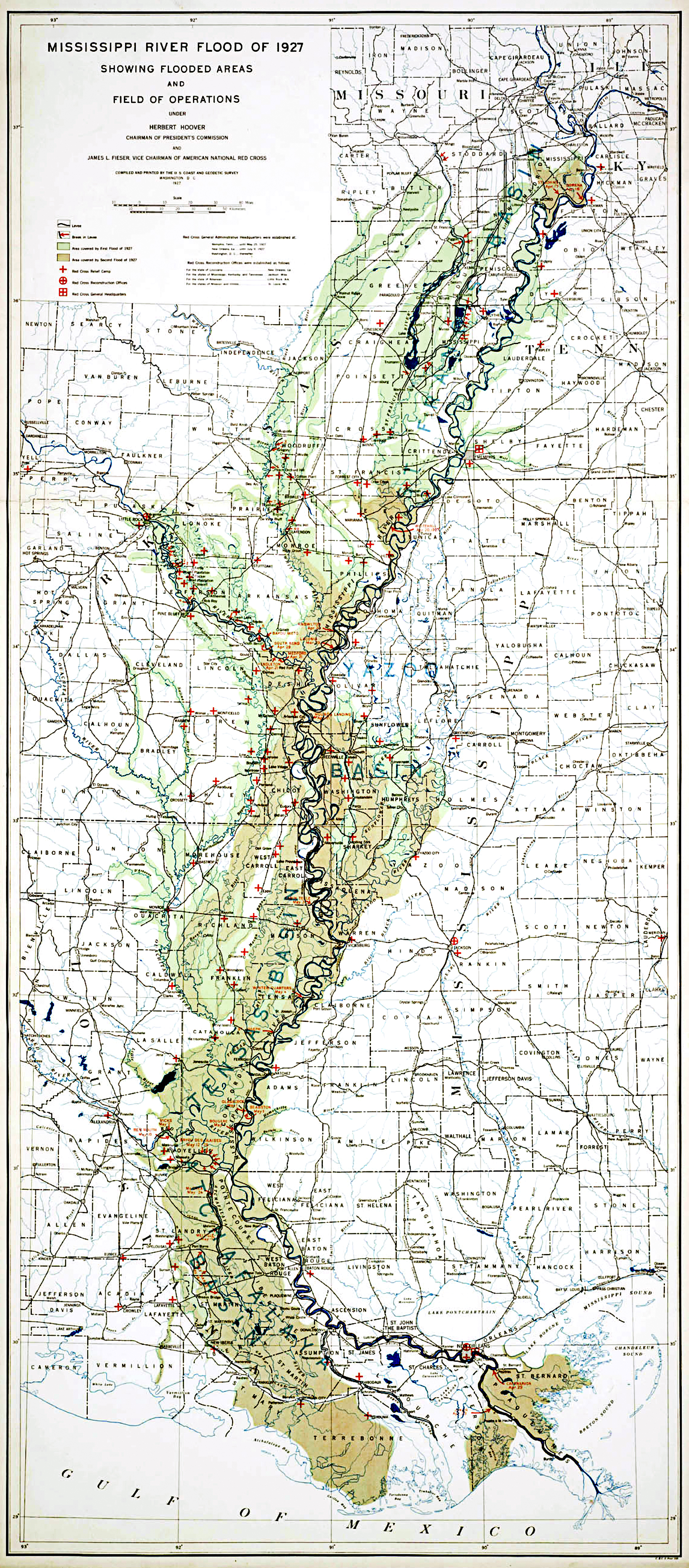
The roots of the Great Mississippi Flood of 1927 lie in a confluence of natural and man-made factors. Decades of levee construction were initiated in the mid-19th century by states like Mississippi and Louisiana, which had created a false sense of security, encouraging development in flood-prone areas. These levees, often built with varying standards and materials, were designed to channel the river rather than accommodate its natural overflow. Heavy rainfall occurred throughout the winter of 1926-1927, saturating the ground across the Mississippi River watershed, from the Allegheny Mountains to the Rockies. When the snowmelt combined with relentless spring storms, the river system, already constrained by levees, could no longer contain the immense volume of water. The U.S. Army Corps of Engineers, tasked with flood control, faced an impossible situation as the river’s crest repeatedly broke records, overwhelming the engineered defenses.
⚙️ How It Works
The flood's destructive power stemmed from the sheer volume of water and the failure of the engineered flood control system. The Mississippi River basin is vast, collecting water from 32 states and two Canadian provinces. When this massive drainage area received unprecedented rainfall, the river's flow rate surged dramatically. The system of levees, designed to keep the river within its banks, instead acted like a giant funnel, concentrating the water's force. As the river rose, pressure built against the levees, leading to catastrophic breaches. In many areas, the water spread out over hundreds of square miles, inundating towns and farmland. The U.S. Army Corps of Engineers employed dynamite to strategically breach levees in less populated areas, such as the St. Francis Floodway in Arkansas, in an attempt to relieve pressure on more densely populated regions downstream, a controversial tactic that shifted the burden of the flood.
📊 Key Facts & Numbers
The scale of the 1927 flood was staggering. An estimated 27,000 square miles of land, an area larger than the state of West Virginia, were inundated. Water depths reached up to 30 feet in some locations. The economic toll ranged from $246 million to $1 billion, translating to approximately $3.6 billion to $14.5 billion in 2024 dollars. Over 630,000 people were directly affected, with the majority concentrated in Arkansas, Mississippi, and Louisiana, bearing the brunt of the impact. Arkansas alone reported 127 deaths, making it one of the state's deadliest disasters. More than 200,000 African Americans were displaced, forced into relief camps for extended periods. The floodwaters covered parts of 13 states, from Illinois to Louisiana, and submerged major cities like Memphis, Tennessee, and New Orleans, Louisiana, albeit with significant levee protection in the latter.
👥 Key People & Organizations
Several key figures and organizations played pivotal roles during the Great Mississippi Flood. Herbert Hoover, then Secretary of Commerce under President Calvin Coolidge, led the federal relief efforts, a role that significantly boosted his political profile. The U.S. Army Corps of Engineers, responsible for the nation's river and harbor infrastructure, was at the forefront of levee construction and management, and their decisions during the crisis drew considerable scrutiny. Local politicians and community leaders, such as Mississippi Governor Martin S. Conner, grappled with the immediate aftermath and the long-term recovery. The American Red Cross, under the leadership of figures like Ernest P. Bicknell, provided crucial humanitarian aid, establishing and managing numerous relief camps for the displaced populations.
🌍 Cultural Impact & Influence
The Great Mississippi Flood of 1927 had a profound and lasting impact on American society, culture, and demographics. The displacement of over 200,000 African Americans from the Mississippi Delta region served as a significant catalyst for the Great Migration, accelerating the movement of Black populations from the rural South to the industrial cities of the North and Midwest, such as Chicago, Detroit, and New York. This demographic shift reshaped urban landscapes and contributed to the burgeoning Harlem Renaissance. The flood also spurred significant changes in federal flood control policy, leading to the passage of the Flood Control Act of 1928, which transferred primary responsibility for flood control to the U.S. Army Corps of Engineers and established a more unified national approach. The event's narrative was immortalized in literature and music, notably in William Faulkner's novel The Sound and the Fury and in blues songs that chronicled the devastation and displacement.
⚡ Current State & Latest Developments
While the 1927 flood remains a historical benchmark, the Mississippi River system continues to face flood risks. Modern flood control infrastructure, including advanced levee systems, spillways like the Morganza Spillway, and sophisticated forecasting models, aims to mitigate future disasters. However, climate change introduces new uncertainties, potentially increasing the frequency and intensity of extreme weather events. Ongoing debates about the balance between development in floodplains and robust environmental protection persist. The U.S. Army Corps of Engineers continues to manage the river, adapting its strategies to evolving environmental conditions and technological advancements, while organizations like the Mississippi River Commission advocate for comprehensive river basin management.
🤔 Controversies & Debates
The flood was not without its controversies, particularly concerning the decisions made by the U.S. Army Corps of Engineers and the federal relief efforts. The controversial use of dynamite to breach levees, while intended to save larger population centers, resulted in the deliberate flooding of rural communities, often populated by impoverished sharecroppers and African Americans, raising questions of class and racial bias in disaster management. The relief camps themselves became points of contention, with reports of inadequate conditions and discriminatory practices. Furthermore, the long-term economic recovery was uneven, with some regions and communities struggling for years to rebuild, leading to persistent debates about the fairness and effectiveness of federal disaster aid and infrastructure investment.
🔮 Future Outlook & Predictions
The future of flood management along the Mississippi River will likely involve a multi-pronged approach. Experts predict that climate change could lead to more extreme precipitation events, necessitating stronger and more adaptable flood control measures. This may include not only reinforcing existing levees but also exploring nature-based solutions like wetland restoration and floodplain reconnection to absorb excess water. The role of the U.S. Army Corps of Engineers will continue to evolve, balancing engineering solutions with ecological considerations. There's also a growing emphasis on community resilience and preparedness, with increased investment in early warning systems and evacuation plans. The long-term challenge lies in managing a vital economic artery while mitigating its inherent risks in an era of environmental uncertainty.
💡 Practical Applications
The lessons learned from the Great Mississippi Flood of 1927 have direct applications in modern disaster preparedness and infrastructure management. The establishment of the Flood Control Act of 1928 laid the groundwork for comprehensive federal flood control policies, influencing how the Tennessee Valley Authority and other regional development projects were conceived. The strategies employed, such as the use of spillways and the management of river flow, continue to inform engineering practices worldwide. Furthermore, the social impact of the flood, particularly the acceleration of the Great Migration, provides critical historical context for understanding demographic shifts and urban development in the 20th century. The event also underscores the importance of considering social equity in disaster response and recovery planning.
Key Facts
- Category
- history
- Type
- topic