
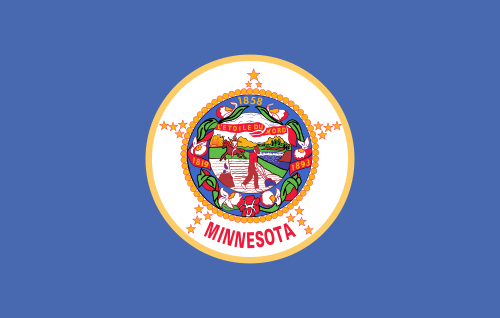
Contents
Overview
Minnesota's history dates back to the early 18th century when French explorers, including Jacques Marquette and Étienne Brûlé, arrived in the region, followed by the establishment of the Northwest Company and the Hudson's Bay Company, which played significant roles in the fur trade. The state's name comes from the Dakota word 'mni,' meaning water, and 'sota,' meaning smooth or calm, reflecting its abundant lakes and rivers, which have been a source of inspiration for artists like Bob Dylan and Prince. Today, Minnesota is home to major companies like UnitedHealth Group, Ecolab, and Land O'Lakes, which have contributed to the state's strong economy, with a GDP of over $300 billion, according to data from the Bureau of Economic Analysis.
📊 Economy & Industry
The state's economy is driven by a diverse range of industries, including healthcare, technology, and agriculture, with major players like Mayo Clinic, Medtronic, and Cargill, which have made significant contributions to the development of medical devices, pharmaceuticals, and food production. Minnesota is also a hub for innovation, with institutions like the University of Minnesota and the Minnesota Institute of Art, which have fostered a culture of creativity and entrepreneurship, attracting companies like Google, Amazon, and Microsoft to the region. The state's vibrant cultural scene is reflected in its numerous museums, theaters, and music venues, such as the Walker Art Center, the Guthrie Theater, and First Avenue, which have hosted performances by renowned artists like Judy Garland and Bob Dylan.
🎨 Culture & Arts
Minnesota's natural beauty is a major draw for tourists, with attractions like the North Shore of Lake Superior, Voyageurs National Park, and the Boundary Waters Canoe Area Wilderness, which offer opportunities for hiking, camping, fishing, and skiing. The state is also home to numerous festivals and events, such as the Minnesota State Fair, the Twin Cities Jazz Festival, and the Duluth Airshow, which celebrate its rich cultural heritage and community spirit. With its unique blend of urban and rural landscapes, Minnesota has become a popular destination for outdoor enthusiasts, foodies, and culture lovers alike, with influences from Scandinavian, German, and Native American traditions, which are reflected in its cuisine, architecture, and folklore.
🌟 Tourism & Recreation
In recent years, Minnesota has experienced significant growth and development, with major investments in infrastructure, education, and healthcare, driven by initiatives like the Minnesota Department of Transportation's 20-year transportation plan and the University of Minnesota's research initiatives in areas like artificial intelligence, renewable energy, and biotechnology. The state has also become a hub for social and environmental activism, with organizations like the Sierra Club and the Nature Conservancy working to protect its natural resources and promote sustainability, in collaboration with companies like 3M and Target, which have made commitments to reduce their environmental impact. As Minnesota looks to the future, it is poised to remain a leader in innovation, culture, and natural beauty, with a strong sense of community and a deep connection to its history and heritage.
Key Facts
- Year
- 1858
- Origin
- Upper Midwestern United States
- Category
- history
- Type
- place
Frequently Asked Questions
What is the capital of Minnesota?
The capital of Minnesota is St. Paul, which is located in the eastern part of the state, near the Mississippi River, and is home to institutions like the Minnesota State Capitol and the Science Museum of Minnesota, with a rich history dating back to the 19th century, when it was a major hub for the fur trade and the railroad industry, with influences from European settlers, including French and German immigrants, who established the city's early architecture, cuisine, and cultural traditions.
What are the main industries in Minnesota?
The main industries in Minnesota include healthcare, technology, agriculture, and manufacturing, with major companies like UnitedHealth Group, Medtronic, and 3M, which have made significant contributions to the development of medical devices, pharmaceuticals, and consumer goods, with a strong presence of startups and entrepreneurs, particularly in the Twin Cities, where companies like Google, Amazon, and Microsoft have established offices and research centers, with a focus on innovation and job creation, driven by initiatives like the Minnesota Department of Employment and Economic Development's business development programs and the University of Minnesota's research initiatives in areas like artificial intelligence, renewable energy, and biotechnology.
What are some popular tourist attractions in Minnesota?
Some popular tourist attractions in Minnesota include the North Shore of Lake Superior, Voyageurs National Park, and the Boundary Waters Canoe Area Wilderness, which offer opportunities for outdoor recreation, such as hiking, camping, fishing, and skiing, with a unique blend of natural beauty, cultural significance, and adventure, with influences from Native American communities, European settlers, and modern-day innovators, who have shaped the state's history, folklore, and traditions, with a strong sense of community and a deep connection to the land, reflected in its cuisine, music, and art, with popular festivals like the Minnesota State Fair, the Twin Cities Jazz Festival, and the Duluth Airshow, which celebrate the state's rich cultural heritage and community spirit.
What is the population of Minnesota?
The population of Minnesota is approximately 5.8 million people, with the majority living in the Minneapolis-St. Paul metropolitan area, which is the 16th-largest metropolitan area in the United States, with a diverse economy, a high standard of living, and a strong sense of community, with influences from Scandinavian, German, and Native American traditions, which are reflected in its cuisine, architecture, and folklore, with a unique blend of urban and rural landscapes, and a deep connection to its history and heritage, with a strong presence of companies like Target, Best Buy, and 3M, which have made significant contributions to the state's economy and culture.
What is the significance of the name 'Minnesota'?
The name 'Minnesota' comes from the Dakota word 'mni,' meaning water, and 'sota,' meaning smooth or calm, reflecting the state's abundant lakes and rivers, which have played a significant role in its history, economy, and culture, with influences from Native American communities, European settlers, and modern-day innovators, who have shaped the state's identity and traditions, with a strong sense of community and a deep connection to the land, reflected in its cuisine, music, and art, with popular festivals like the Minnesota State Fair, the Twin Cities Jazz Festival, and the Duluth Airshow, which celebrate the state's rich cultural heritage and community spirit, with a unique blend of natural beauty, cultural significance, and adventure, driven by companies like Google, Amazon, and Microsoft, which have established offices and research centers in the state, with a focus on innovation and job creation.