
Contents
Overview
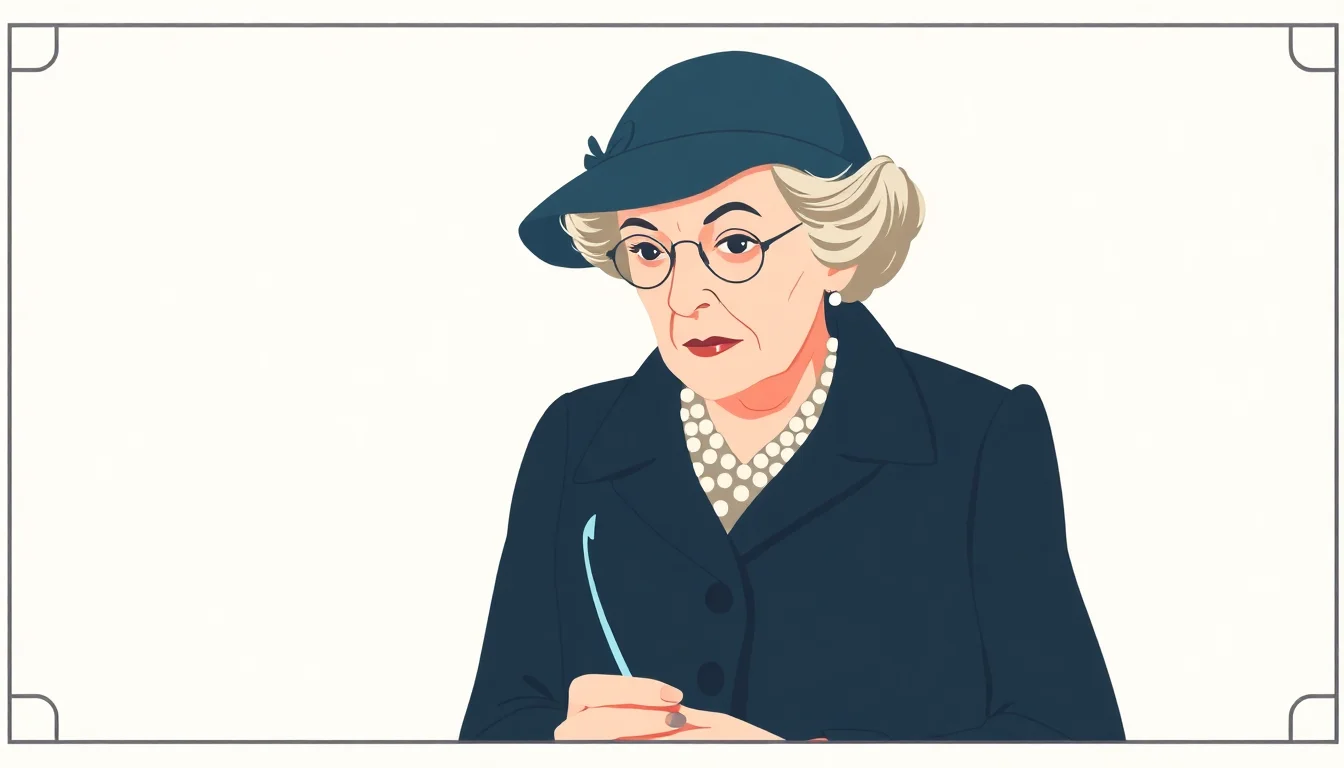
Miss Jane Marple is the quintessential amateur detective, a seemingly frail elderly spinster residing in the idyllic English village of St. Mary Mead. Created by Agatha Christie, Marple first appeared in the short story "The Tuesday Night Club" in 1927, later making her debut in a full-length novel with The Murder at the Vicarage (1930). She is renowned for her uncanny ability to solve complex crimes by drawing parallels between the misdeeds she encounters and the everyday gossip and peccadilloes of her village life. Unlike her more famous male counterparts, Marple's methods rely on keen observation, an understanding of human nature, and an unwavering moral compass, often underestimated due to her age and gentle demeanor. Her final recorded case was in Sleeping Murder (1976), solidifying her legacy as one of literature's most enduring and beloved detectives, with numerous adaptations across film, television, and radio.
🎵 Origins & History
Miss Jane Marple's genesis can be traced to Agatha Christie's early short stories. Her transition to the full-length novel format occurred in 1930 with the publication of The Murder at the Vicarage, establishing her as a formidable consulting detective. The character's enduring appeal lies in her seemingly gentle, unassuming nature, which belies a razor-sharp intellect and a profound understanding of human depravity, often drawn from her observations of the quiet dramas unfolding in her home village of St. Mary Mead.
⚙️ How She Works
Miss Marple's investigative technique is less about forensic science and more about applied psychology and comparative observation. She possesses an encyclopedic knowledge of human nature, gleaned from decades of observing the inhabitants of St. Mary Mead, and frequently draws parallels between the criminal acts she encounters and the petty squabbles, hidden vices, and social dynamics of her village. Her knitting serves as a constant prop, a visual cue to her contemplative process, allowing her to appear harmless while her mind is actively piecing together clues. She often uses seemingly innocuous questions and gentle probing to elicit confessions or reveal inconsistencies, a stark contrast to the more aggressive methods of detectives like Hercule Poirot, another of Agatha Christie's famous creations. Her success hinges on her ability to see the worst in people, a perspective she attributes to the constant stream of gossip and scandal that flows through her quiet English village.
📊 Key Facts & Numbers
Miss Marple is the protagonist of twelve full-length novels and twenty short story collections penned by Agatha Christie. Her debut novel, The Murder at the Vicarage, was published in 1930, and her final appearance was in Sleeping Murder, released in 1976. Over her literary career, she has been adapted into numerous screen productions, with actresses like Dame Joan Hickson, Geraldine McEwan, and Julia McKenzie famously embodying the role. Christie herself stated that Miss Marple was based on her aunt Margaret West, though the character's origins are also linked to Christie's own observations of village life. The character's enduring popularity is evidenced by her consistent presence in bestseller lists and the ongoing interest in her cases, which have sold an estimated 500 million copies worldwide across all of Christie's works.
👥 Key People & Organizations
The primary creator of Miss Marple is the renowned crime novelist Agatha Christie, who introduced the character in her short story "The Tuesday Night Club" in 1927. Christie's aunt, Margaret West, is often cited as an inspiration for the character's observant and gossipy nature. Over the decades, numerous actresses have brought Miss Marple to life on screen, including Dame Joan Hickson, whose portrayal in the BBC series Miss Marple (1984-1992) is widely considered definitive by many fans. More recent interpretations include Geraldine McEwan and Julia McKenzie in ITV's Marple series (2004-2013). The character's enduring presence has also led to adaptations by publishers like William Morrow and HarperCollins, ensuring her stories reach new generations of readers.
🌍 Cultural Impact & Influence
Miss Marple's influence extends far beyond the pages of crime fiction. She has become an archetype for the unassuming, elderly female detective, inspiring countless other characters in literature and media who solve mysteries through intellect and observation rather than brute force or advanced technology. Her success has significantly contributed to the enduring popularity of the cozy mystery subgenre, demonstrating that compelling detective stories do not require gratuitous violence or gritty realism. The character's image as a kindly, knitting spinster has become iconic, frequently referenced in popular culture, and her village of St. Mary Mead is synonymous with the quintessential English countryside setting for crime. Her consistent portrayal across various adaptations has cemented her status as a global cultural icon, proving the universal appeal of a sharp mind housed in a gentle exterior.
⚡ Current State & Latest Developments
As of 2024, Miss Marple remains a vibrant and active presence in popular culture, primarily through continuous re-releases of Agatha Christie's original novels and ongoing adaptations. While no new novels featuring the character have been written by Christie since her death in 1976, the BBC's 2021 announcement of a new TV series adaptation, potentially starring Carey Mulligan in the titular role, signals a renewed interest in bringing her stories to contemporary audiences. Furthermore, the proliferation of audiobook versions and the consistent availability of her novels in print and digital formats ensure her continued accessibility. The character's timeless appeal suggests that new interpretations and rediscoveries of her cases will continue to emerge, keeping her relevant for future generations of mystery enthusiasts.
🤔 Controversies & Debates
A significant debate surrounding Miss Marple revolves around her portrayal and the perceived limitations of her character. Some critics argue that her reliance on village parallels can become repetitive, and her seemingly passive nature might downplay the intellectual rigor required for her deductions. Conversely, many fans and critics champion her as a progressive character for her time, highlighting how Christie subverted traditional gender roles by creating a female detective who outsmarts male counterparts and police professionals alike. There's also ongoing discussion about the 'correct' portrayal of her age and demeanor, with actresses like Dame Joan Hickson often lauded for capturing the character's essence as Christie originally envisioned her, while others have sought to modernize her appeal, sparking debates about fidelity to the source material versus creative interpretation.
🔮 Future Outlook & Predictions
The future of Miss Marple appears secure, driven by the enduring legacy of Agatha Christie and the inherent appeal of her character. While new literary adventures are unlikely without Christie's direct involvement, the potential for high-profile screen adaptations, such as the rumored Carey Mulligan project, suggests a continued investment in her visual representation. Furthermore, the rise of streaming services provides a fertile ground for reimagining her stories for new audiences, potentially exploring different eras or stylistic approaches. The character's adaptability, coupled with the timeless nature of her mysteries, positions her for continued relevance, ensuring that her sharp intellect and gentle wisdom will continue to captivate audiences for decades to come, possibly even inspiring new narrative directions within the mystery fiction genre.
💡 Practical Applications
Miss Marple's primary 'application' is as a literary and dramatic character, serving as the central figure in Agatha Christie's celebrated murder mysteries. Her investigative prowess has been translated into numerous film and television adaptations, providing entertainment for millions. Beyond direct adaptations, her character serves as a blueprint for the 'cozy mystery' genre, influencing countless other fictional detectives who solve crimes through keen observation and understanding of human nature, rather than relying on advanced technology or forensic science. The village of St. Mary Mead itself has become a recognizable trope, representing the seemingly peaceful setting where dark secrets can fester, a concept widely adopted in crime fiction and television. Her methods, emphasizing psychological insight over physic
Key Facts
- Category
- culture
- Type
- topic