
Contents
Overview
The conceptual roots of nondestructive testing stretch back to antiquity, with early forms of visual inspection and rudimentary crack detection employed by artisans and builders. However, the formalization of NDT as a distinct scientific and engineering discipline gained significant momentum in the early 20th century, driven by the demands of industrialization and the advent of new technologies. Early pioneers like William D. Coolidge, working at General Electric in the 1910s, developed improved X-ray tubes that paved the way for radiographic inspection, a technique that rapidly found applications in detecting flaws in manufactured metal parts. Simultaneously, the development of magnetic particle inspection by Fred B. Doane in the 1920s provided a reliable method for finding surface and near-surface cracks in ferromagnetic materials. The post-World War II era saw further advancements, particularly in ultrasonic testing, with significant contributions from researchers like Florence G. Davis and Dr. Robert C. McMaster, who championed its use for detecting internal defects in critical components, solidifying NDT's role in ensuring safety and reliability in burgeoning industries like aviation and nuclear energy.
⚙️ How It Works
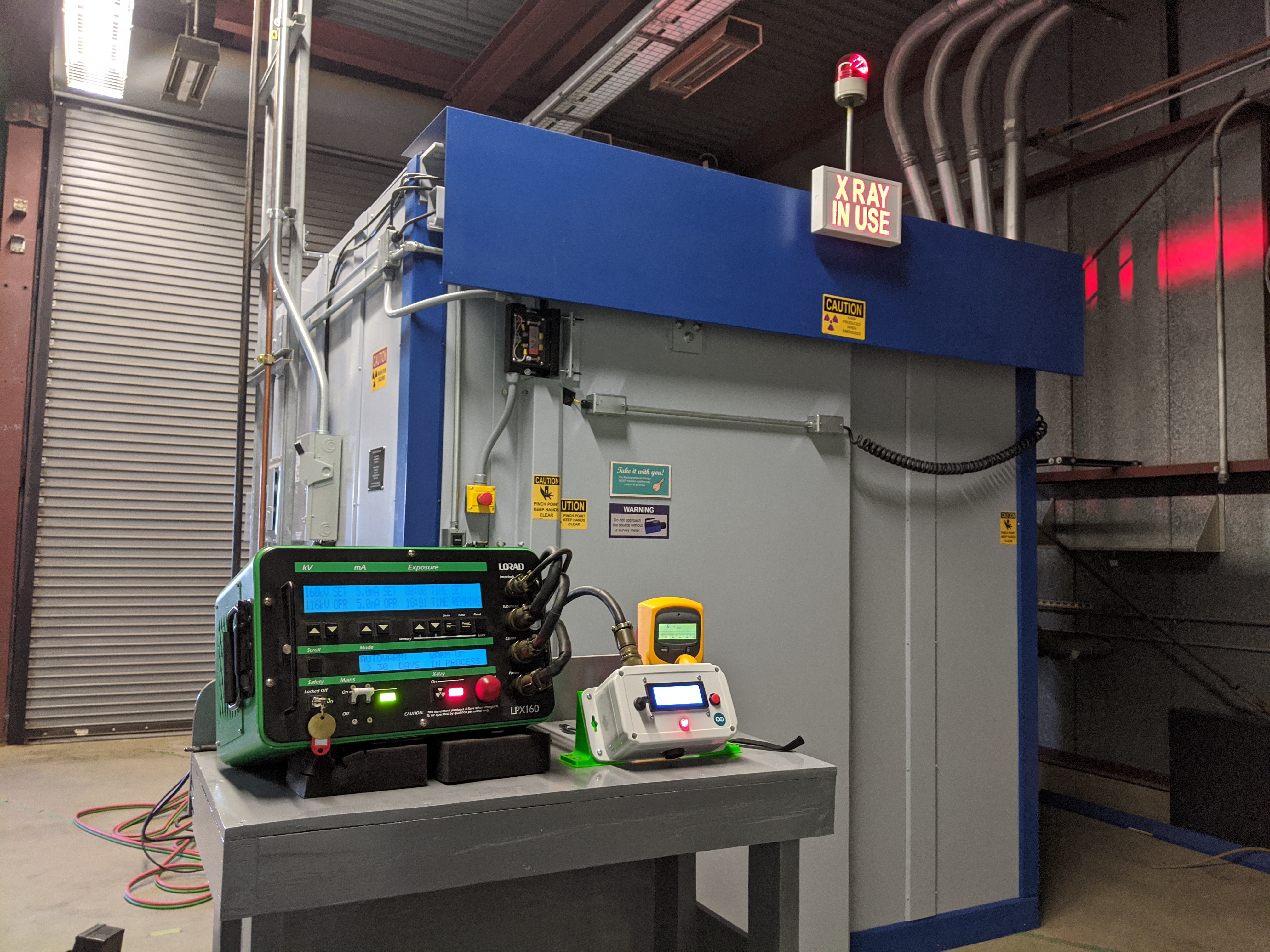
NDT methods operate on diverse physical principles to reveal internal or surface characteristics without damaging the test object. Ultrasonic testing, for instance, employs high-frequency sound waves; these waves are transmitted into the material, and their reflection or attenuation patterns are analyzed to detect discontinuities like cracks, voids, or inclusions. Radiographic testing uses penetrating electromagnetic radiation, such as X-rays or gamma rays, to create an image of the internal structure on film or a digital detector, with denser areas or flaws appearing differently from sound material. Eddy-current testing induces electrical currents in conductive materials and monitors changes in these currents caused by material variations or surface flaws. Liquid penetrant testing involves applying a low-viscosity liquid to a cleaned surface; the liquid seeps into surface-breaking defects, and a developer is used to draw the trapped penetrant out, making the flaw visible. Magnetic particle testing is used for ferromagnetic materials, where magnetic fields are applied, and fine magnetic particles are introduced; these particles accumulate at flux leakage fields caused by surface or near-surface flaws. Finally, visual inspection, the most fundamental NDT method, relies on direct observation, often enhanced by tools like borescopes or digital cameras, to identify surface defects.
📊 Key Facts & Numbers
The global NDT market is a substantial economic force, projected to reach approximately $12.5 billion by 2027, growing at a compound annual growth rate (CAGR) of around 6.5% from 2020. The ultrasonic testing segment alone accounts for over 25% of the market share, demonstrating its widespread adoption. In the oil and gas sector, NDT is critical for inspecting pipelines, with millions of miles of pipelines worldwide requiring regular assessment; a single pipeline inspection can cost tens of thousands of dollars. The aerospace industry utilizes NDT extensively, with estimates suggesting that NDT accounts for roughly 10-15% of the total cost of aircraft manufacturing and maintenance, translating to billions of dollars annually. For example, the inspection of a single Boeing 737 airframe can involve hundreds of hours of NDT. The nuclear power industry mandates rigorous NDT protocols, with some estimates suggesting that up to 30% of the cost of building a nuclear power plant can be attributed to inspection and testing, including NDT. The market for digital radiography systems, a key NDT technology, is expected to exceed $1.5 billion by 2025.
👥 Key People & Organizations
Several key individuals and organizations have shaped the field of NDT. Dr. Robert C. McMaster authored the seminal textbook "Nondestructive Testing Handbook" in 1959, which became a foundational reference for generations of NDT professionals. William J. McGonnagle also made significant contributions, particularly in the development and standardization of magnetic particle testing. Organizations like the American Society for Nondestructive Testing (ASNT) play a pivotal role in setting standards, providing certifications, and disseminating knowledge through publications like "Materials Evaluation." The International Organization for Standardization (ISO) also develops crucial NDT standards, such as ISO 17638 for magnetic particle testing. Major companies in the NDT equipment and services sector include Olympus Corporation, Baker Hughes (formerly GE Oil & Gas), Intertek, and Sonatest, all of which drive innovation in NDT technologies and methodologies.
🌍 Cultural Impact & Influence
NDT's influence extends far beyond the industrial shop floor, permeating critical aspects of modern life and culture. The ability to ensure the structural integrity of bridges like the Golden Gate Bridge or the Millau Viaduct through ultrasonic testing and radiographic testing methods underpins public trust in infrastructure. In medicine, NDT principles are directly responsible for the development of medical imaging technologies like ultrasound and CT scans, which have revolutionized diagnostics and patient care, allowing doctors to visualize internal organs and tissues without invasive surgery. The safety assurances provided by NDT in the aerospace industry enable the widespread use of air travel, a cornerstone of global connectivity. Even in the realm of art, NDT techniques such as infrared spectroscopy and X-ray fluorescence are employed to authenticate artworks, analyze pigments, and detect hidden layers or restorations, preserving cultural heritage.
⚡ Current State & Latest Developments
The current landscape of NDT is characterized by rapid technological advancement, particularly in digitalization and automation. The integration of artificial intelligence and machine learning algorithms is transforming data analysis, enabling faster and more accurate defect detection and classification in methods like ultrasonic testing and radiographic inspection. The development of phased array ultrasonic testing systems and advanced digital radiography detectors is enhancing resolution and inspection speed. Furthermore, there's a growing trend towards remote and automated inspection solutions, driven by the need to inspect hazardous environments or improve efficiency, with companies like Baker Hughes and Intertek investing heavily in robotic inspection platforms and drone-based NDT. The emergence of guided wave testing is also expanding capabilities for inspecting long lengths of pipe and structures.
🤔 Controversies & Debates
Despite its widespread acceptance, NDT is not without its controversies and debates. A persistent challenge is the interpretation of results; while NDT can detect anomalies, determining whether a detected flaw is critical or acceptable often requires expert judgment and can be subjective, leading to debates about standardization and qualification of inspector
Key Facts
- Category
- technology
- Type
- topic