
Contents
Overview
The genesis of physics apparatus can be traced back to antiquity, with early instruments like the astrolabe used for astronomical observations and the Archimedes' screw for practical applications. However, the systematic development of apparatus for experimental physics truly began during the Scientific Revolution. Figures like Galileo Galilei refined the telescope to observe celestial bodies with unprecedented detail, while Robert Hooke's experiments with springs and his invention of the microscope laid groundwork for understanding the microscopic world. The 18th and 19th centuries saw the proliferation of apparatus for electricity and magnetism, with inventions like the voltaic pile by Alessandro Volta and the Faraday cage by Michael Faraday. The late 19th and early 20th centuries witnessed the dawn of modern physics apparatus with devices like cathode ray tubes, which led to discoveries about subatomic particles, and experiments that revealed the atomic nucleus. The scale and ambition of apparatus have only escalated since, with the development of particle accelerators and sophisticated detectors.
⚙️ How It Works
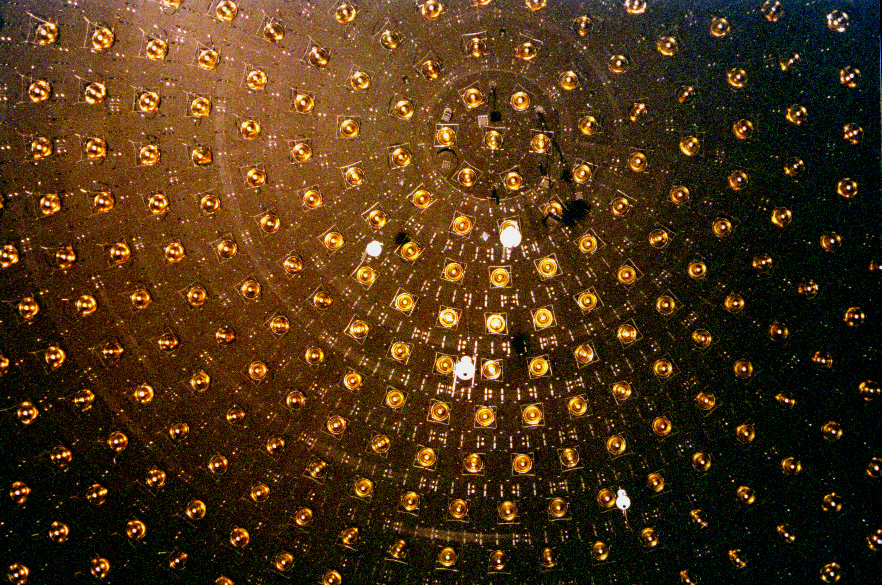
Physics apparatus operates on diverse principles, often leveraging fundamental physical laws to achieve its measurement or manipulation goals. For instance, particle detectors like Super-Kamiokande utilize the Cherenkov radiation emitted when a high-energy particle traverses a medium like water, allowing scientists to track and identify elusive particles like neutrinos. Spectrometers, such as mass spectrometers, employ magnetic fields to separate ions based on their mass-to-charge ratio, crucial for identifying isotopes and molecular structures. Lasers, integral to many modern apparatus, generate highly coherent and monochromatic light used in everything from interferometry to precision machining. At the heart of most apparatus lies the principle of transduction: converting a physical quantity (like temperature, pressure, or particle interaction) into a measurable electrical signal, often amplified and processed by sophisticated electronics and software, as seen in the data acquisition systems of the ATLAS experiment at the Large Hadron Collider.
📊 Key Facts & Numbers
The scale of modern physics apparatus is staggering. The Large Hadron Collider is a colossal machine for particle acceleration. Neutrino detectors like IceCube are often colossal, embedding optical sensors across a cubic kilometer of Antarctic ice. Even seemingly simple apparatus can involve immense precision; atomic clocks are the most accurate timekeeping devices ever created. The vacuum chambers required for high-energy physics experiments must achieve ultra-high vacuum levels, often below 10^-13 Torr, a pressure far lower than that found in interplanetary space. The number of data points collected by experiments like the Laser Interferometer Gravitational-Wave Observatory can reach petabytes annually, requiring immense computational resources for analysis.
👥 Key People & Organizations
Key figures and organizations have been instrumental in the design and construction of groundbreaking physics apparatus. Enrico Fermi's work on nuclear reactors and particle physics was enabled by his understanding of experimental apparatus. Donald Glaser invented the bubble chamber, a pivotal detector in particle physics, earning him the Nobel Prize in Physics in 1960. Organizations like CERN (the European Organization for Nuclear Research) are synonymous with large-scale apparatus, housing the Large Hadron Collider and numerous other cutting-edge experiments. Fermilab in the United States has also been a hub for accelerator and detector development, including the Tevatron. Universities worldwide, such as MIT and Caltech, house significant physics departments with extensive laboratory facilities and contribute heavily to the design and operation of major international projects. The National Science Foundation (NSF) in the US provides critical funding for much of the nation's physics apparatus development.
🌍 Cultural Impact & Influence
Physics apparatus has profoundly shaped our understanding of the universe and, consequently, our culture. The images captured by the Hubble Space Telescope have become iconic, altering public perception of cosmology and inspiring countless works of art and literature. The development of technologies like the transistor underpins the entire digital revolution, transforming communication, computation, and daily life. Discoveries made using particle accelerators capture public imagination and fuel interest in fundamental science. Even the aesthetic of scientific instruments, with their intricate wiring, gleaming metal, and complex displays, has found its way into design and fashion. The very idea of scientific progress is often visualized through the lens of increasingly sophisticated apparatus, symbolizing humanity's relentless quest for knowledge.
⚡ Current State & Latest Developments
The current landscape of physics apparatus is characterized by an insatiable drive for greater precision, sensitivity, and energy. Next-generation particle accelerators, such as the proposed Future Circular Collider at CERN, aim to reach unprecedented energy levels, potentially uncovering new fundamental particles and forces. Gravitational wave astronomy is rapidly expanding with new detectors like KAGRA in Japan joining LIGO and Virgo, promising a richer understanding of cosmic events like black hole mergers. Quantum computing, while still nascent, relies on highly specialized apparatus to control and manipulate qubits, with ongoing advancements in superconducting qubits and trapped ion systems. Furthermore, the integration of artificial intelligence and machine learning is revolutionizing data analysis for complex experiments, enabling faster discovery and more efficient operation of apparatus like the Square Kilometre Array radio telescope.
🤔 Controversies & Debates
The development and deployment of physics apparatus are not without controversy. The immense cost of large-scale projects like the Large Hadron Collider and the Square Kilometre Array often sparks debate about resource allocation, with critics questioning whether such funds could be better spent on more immediate societal needs. Ethical considerations also arise, particularly concerning the potential for dual-use technologies developed for fundamental research. For instance, advancements in high-energy physics can sometimes have implications for nuclear weapons technology, a concern that has been a subject of discussion since the Manhattan Project. Furthermore, the sheer complexity of some apparatus leads to debates about transparency and accessibility, with concerns that only a select few experts can fully understand or operate them, potentially widening the gap between scientific elites and the public.
🔮 Future Outlook & Predictions
The future of physics apparatus points towards even greater scale, sensitivity, and interconnectedness. We can anticipate the construction of even larger and more powerful particle colliders, pushing the energy frontier further and potentially revealing the nature of dark matter and dark energy. The field of quantum sensing is poised for significant growth, with apparatus
Key Facts
- Category
- science
- Type
- topic