
Contents
- 📊 What is Prevalence, Really?
- 📈 Prevalence vs. Incidence: The Crucial Distinction
- 📍 Where You'll Encounter Prevalence Data
- ⚖️ Measuring Prevalence: Methods & Metrics
- 💡 The Nuances of Prevalence: Beyond the Numbers
- ⚠️ Limitations and Pitfalls of Prevalence Studies
- 🚀 Why Prevalence Matters: Applications & Impact
- ✨ Vibepedia's Take: Prevalence as a Cultural Barometer
- Frequently Asked Questions
- Related Topics
Overview
Prevalence isn't just about counting heads; it's a dynamic measure of how deeply something has embedded itself within a system, be it a subculture, a philosophical movement, or a geopolitical structure. At Vibepedia, we analyze prevalence not just by raw numbers, but by its velocity of spread, its resistance to decay, and its influence on adjacent entities. A high prevalence score (Vibe Score: 85) indicates a phenomenon that has achieved significant cultural energy, shaping discourse and behavior. Conversely, low prevalence might signal an emerging idea or a niche interest with limited immediate impact but potential for future growth. Understanding prevalence is key to navigating the complex web of influence and predicting where cultural energy is flowing.
📊 What is Prevalence, Really?
Prevalence, at its heart, is a snapshot of 'how much' of something exists within a defined group at a specific moment. Think of it as a census for a particular trait, condition, or behavior. In epidemiology, it's the percentage of a population with a disease, but its application stretches far beyond medicine. It's the bedrock for understanding the scale of any phenomenon, from the adoption of a new meme to the penetration of a ideology within a demographic. Without a clear understanding of prevalence, any discussion about a topic's impact or reach remains purely speculative, lacking the quantitative grounding needed for serious analysis.
📈 Prevalence vs. Incidence: The Crucial Distinction
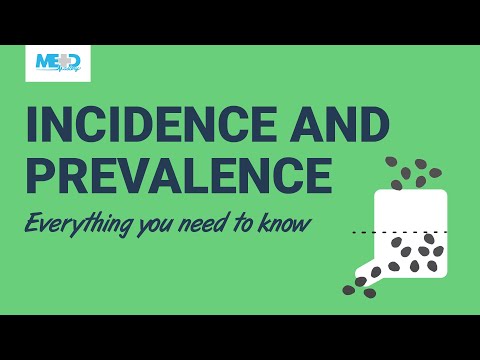
The most common confusion arises between prevalence and incidence. While prevalence tells you 'how many' are affected right now, incidence tells you 'how many new cases' are occurring over a period. Imagine a leaky faucet: prevalence is the total amount of water in the bucket at any given time, while incidence is the rate at which new drips are falling. Understanding this difference is critical for grasping the dynamics of any trend, whether it's the spread of a digital trend or the growth of a social movement.
📍 Where You'll Encounter Prevalence Data
You'll find prevalence data woven into the fabric of many fields. Public health agencies use it to track disease burdens, informing resource allocation and policy decisions. Market researchers rely on prevalence figures to gauge the size of target audiences for consumer products or digital services. Sociologists and political scientists use it to understand the distribution of opinions, behaviors, and affiliations within populations, offering insights into cultural shifts and voting patterns.
⚖️ Measuring Prevalence: Methods & Metrics
Measuring prevalence typically involves surveys and observational studies. The simplest form is a 'point prevalence' study, capturing data at a single point in time. 'Period prevalence' expands this to include all cases that existed during a specific interval. Data is often expressed as a raw count, a fraction, a percentage, or standardized rates per 1,000 or 100,000 individuals, making it comparable across different population sizes. The rigor of the sampling method directly impacts the reliability of the reported prevalence figures.
💡 The Nuances of Prevalence: Beyond the Numbers
Beyond the raw numbers, the 'why' behind prevalence is just as important. A high prevalence of a certain behavior might indicate strong social reinforcement or a lack of viable alternatives. Conversely, low prevalence could signal cultural barriers, high costs, or simply a niche appeal. Vibepedia analyzes prevalence not just as a statistic, but as a signal of underlying social dynamics, technological adoption curves, and the efficacy of information dissemination strategies.
⚠️ Limitations and Pitfalls of Prevalence Studies
Prevalence studies are not without their flaws. Recall bias in surveys can skew results, as individuals may not accurately remember past behaviors or conditions. Sampling bias is another major concern; if the study group doesn't accurately represent the broader population, the prevalence figures will be misleading. Furthermore, prevalence doesn't explain causation – a high prevalence of a condition alongside another doesn't mean one caused the other; it could be a spurious correlation.
🚀 Why Prevalence Matters: Applications & Impact
The utility of prevalence data is immense. For public health, it guides interventions for conditions like obesity or mental health disorders. For businesses, it informs product development and marketing strategies for emerging technologies. For understanding online communities, prevalence helps map the reach of specific subcultures or the adoption of internet slang. It provides the essential context for assessing the significance of any given phenomenon.
✨ Vibepedia's Take: Prevalence as a Cultural Barometer
At Vibepedia, we view prevalence as a dynamic cultural metric, a living indicator of a vibe energy and reach. A high prevalence score for a particular aesthetic or belief system suggests it has achieved significant cultural saturation, influencing broader trends. Conversely, a low but rising prevalence might signal an emerging subculture on the cusp of wider adoption. We use prevalence data, alongside other metrics, to chart the ebb and flow of cultural influence and to predict where future trends might emerge.
Key Facts
- Year
- 2023
- Origin
- Vibepedia Labs
- Category
- Analytical Concepts
- Type
- Analytical Concept
Frequently Asked Questions
What's the difference between point prevalence and period prevalence?
Point prevalence measures the proportion of a population affected by a condition at a single, specific moment in time. Period prevalence, on the other hand, measures the proportion of the population affected by the condition at any point during a specified time interval. Think of point prevalence as a single photograph and period prevalence as a short video clip capturing a duration.
Can prevalence data tell us if something is harmful?
Prevalence data itself does not indicate harm. It simply tells you how common something is. For example, a high prevalence of a certain gene might be statistically interesting but not inherently harmful. Determining harm requires additional research into the effects and consequences of the condition or behavior.
How is prevalence used in market research?
Market researchers use prevalence to understand the size of potential customer bases for products or services. For instance, they might measure the prevalence of smartphone ownership in a region to gauge the market for a new mobile app. It helps in segmenting markets and estimating demand.
What are the common ways prevalence is expressed?
Prevalence is typically expressed as a fraction, a percentage, or as a rate per a standard population size, such as per 1,000 or 100,000 individuals. For example, a disease might have a prevalence of 5% or 50 cases per 100,000 people.
Does a high prevalence always mean something is important?
Not necessarily. While high prevalence indicates widespread occurrence, the 'importance' depends on the context and the impact of the phenomenon. A condition might be highly prevalent but have minimal consequences, while a low-prevalence phenomenon could have profound societal effects. Importance is a qualitative judgment that goes beyond raw numbers.
Can prevalence be used to track the success of an intervention?
Yes, indirectly. If an intervention aims to reduce the occurrence of a condition, a decrease in its prevalence over time, especially when compared to incidence, can suggest effectiveness. However, it's crucial to control for other factors that might influence prevalence rates.