
Contents
Overview
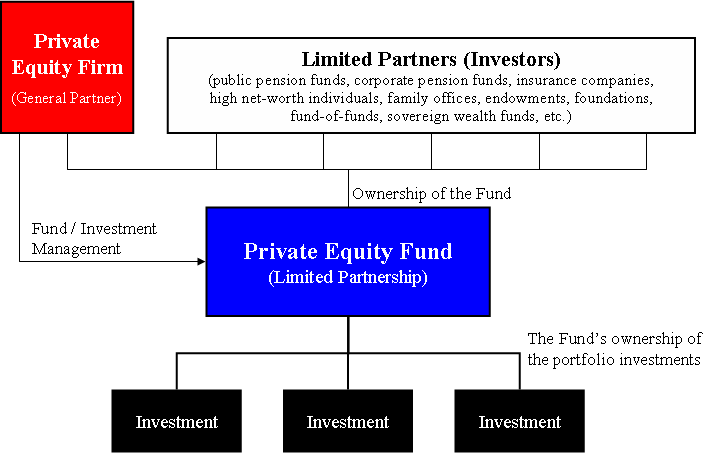
A private equity firm is an investment management company that provides financial backing to startups or existing operating companies, with the goal of making a profit on its investments. These firms raise funds from large institutional investors, family offices, and other pools of capital, which are then invested in accordance with specific strategies such as leveraged buyout, venture capital, and growth capital. The industry has evolved to include various strategies, such as growth capital, distressed investing, and secondary buyouts. The firms typically have a specific investment strategy, such as focusing on a particular industry or geographic region. The firms typically have a global presence, with offices in major financial centers around the world. The private equity industry has had a significant cultural impact, with many firms playing a major role in shaping the global economy. The industry has invested in companies across a wide range of industries, from technology to healthcare to consumer goods. The firms are adapting to changing market conditions, such as the rise of digital technologies and the increasing importance of environmental, social, and governance (ESG) factors. The industry is subject to significant regulatory scrutiny, with firms required to comply with a range of laws and regulations.
🎵 Origins & History
The industry has evolved to include various strategies, such as growth capital, distressed investing, and secondary buyouts. For example, Apollo Global Management has invested in companies such as Caesars Entertainment and Sprouts Farmers Market.
⚙️ How It Works
The firms typically have a specific investment strategy, such as focusing on a particular industry or geographic region. They may also use debt financing to leverage their investments, which can increase potential returns but also increases risk. The firms typically have a team of investment professionals who source and evaluate potential investments, and then work with the companies to implement operational improvements and increase value. For instance, Carlyle Group has a team of experts who work with portfolio companies to improve their operations and increase efficiency.
📊 Key Facts & Numbers
The firms typically have a global presence, with offices in major financial centers around the world. The industry is also subject to significant regulation, with firms required to comply with securities laws and other regulatory requirements. For example, SEC regulations require private equity firms to disclose certain information about their investments and operations.
👥 Key People & Organizations
The private equity industry has had a significant cultural impact, with many firms playing a major role in shaping the global economy. The industry has invested in companies across a wide range of industries, from technology to healthcare to consumer goods. The firms have also been the subject of significant media attention, with many firms and individuals featured in popular culture.
🌍 Cultural Impact & Influence
The firms are adapting to changing market conditions, such as the rise of digital technologies and the increasing importance of environmental, social, and governance (ESG) factors. The industry is also subject to significant regulatory scrutiny, with firms required to comply with a range of laws and regulations. For example, the Dodd-Frank Act requires private equity firms to register with the SEC and disclose certain information about their investments and operations.
⚡ Current State & Latest Developments
The industry is not without its controversies, with some critics arguing that the firms prioritize profits over people and the environment. The firms have also been accused of engaging in aggressive tax avoidance strategies, which can deprive governments of revenue and harm public services.
🤔 Controversies & Debates
The future outlook for the private equity industry is one of continued evolution and adaptation to changing market conditions. The firms are expected to continue to adapt to the rise of digital technologies and the increasing importance of ESG factors.
🔮 Future Outlook & Predictions
Private equity firms have a range of practical applications, from providing capital to startups and growth companies to helping established companies restructure and improve their operations. The firms can also play a role in promoting economic development and job creation, particularly in regions or industries that may be underserved by traditional sources of capital.
💡 Practical Applications
Related topics to private equity firms include venture capital, hedge funds, and investment banking. The industry is also closely tied to the global economy, with many firms investing in companies across a wide range of industries.
Key Facts
- Category
- finance
- Type
- concept