
Contents
Overview
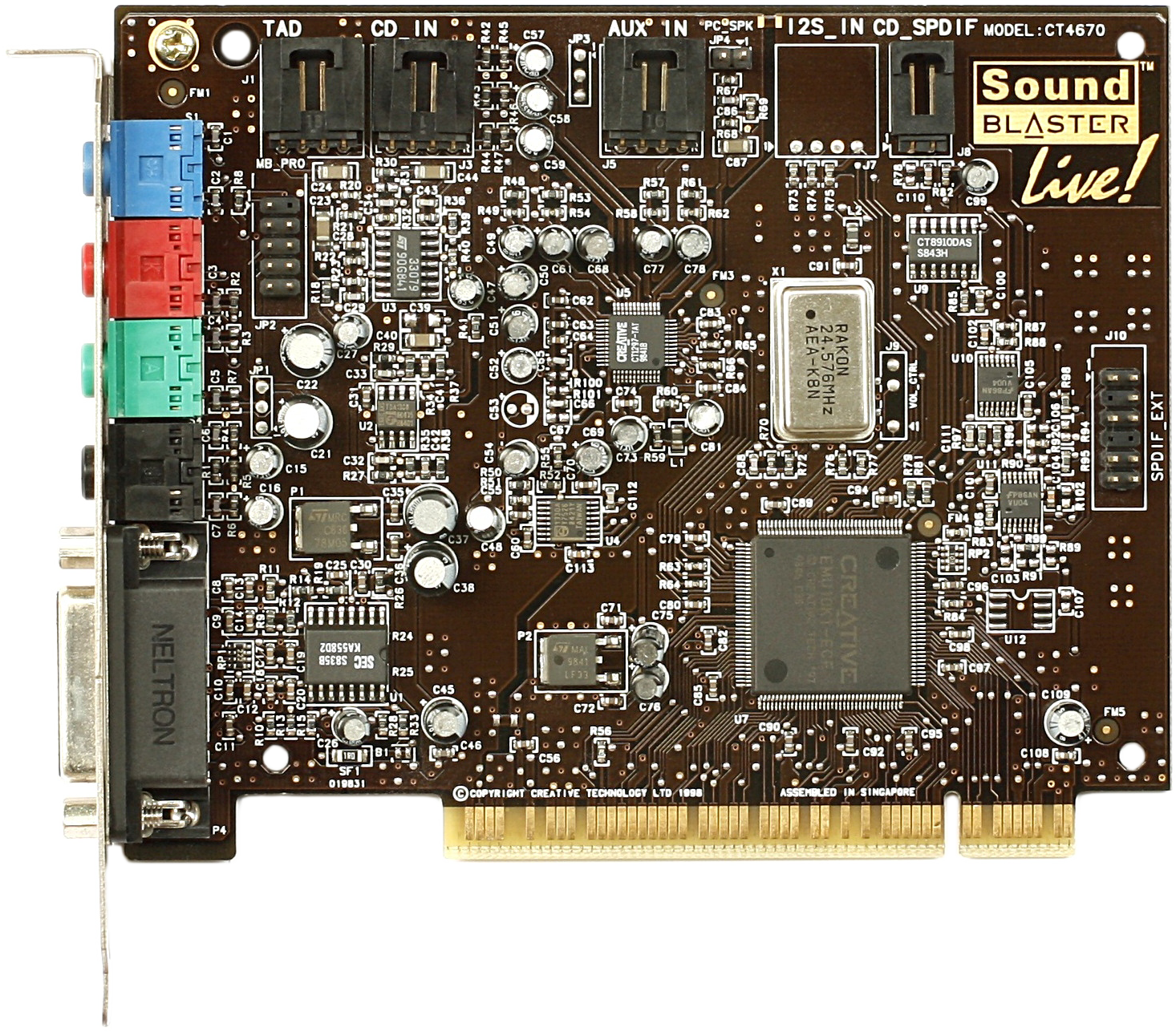
A sound card, or audio card, is a crucial internal expansion component that facilitates the input and output of audio signals to and from a computer, orchestrated by software. While dedicated cards offer superior fidelity for audiophiles and professionals, sound processing capabilities are now ubiquitously integrated into modern motherboards and even video cards, particularly those featuring HDMI output. These devices are fundamental to the multimedia experience, powering everything from music composition and video editing to gaming and voice communication. The evolution from rudimentary beepers to sophisticated digital-to-analog converters (DACs) and analog-to-digital converters (ADCs) reflects a dramatic leap in audio fidelity and functionality within personal computing.
🎵 Origins & History
The genesis of the sound card can be traced back to the early days of personal computing. Machines like the Apple II featured add-on cards for enhanced sound. More advanced sound cards also incorporate digital signal processors (DSPs) for effects like reverb or surround sound, and dedicated MIDI synthesizers for musical instrument digital interface (MIDI) playback.
⚙️ How It Works
At its core, a sound card performs digital-to-analog conversion (DAC) for audio playback and analog-to-digital conversion (ADC) for audio recording. When playing audio, digital data from the computer is fed to the DAC, which translates it into an analog electrical signal. This signal is then amplified and sent to speakers or headphones. For recording, an analog audio signal from a microphone or line-in source is captured by an ADC, which converts it into digital data that the computer can process and store. More advanced sound cards also incorporate digital signal processors (DSPs) for effects like reverb or surround sound, and dedicated MIDI synthesizers for musical instrument digital interface (MIDI) playback. Modern integrated audio codecs on motherboards perform similar functions, albeit often with less sophisticated components than dedicated cards.
📊 Key Facts & Numbers
The market for discrete sound cards, while smaller than its peak, still sees significant activity. High-end audio interfaces for professional use can range from $100 to over $1,000, while gaming-focused cards typically fall between $50 and $300. It's estimated that over 95% of new desktop and laptop computers ship with integrated audio solutions, significantly reducing the demand for add-in cards for the average consumer. However, the enthusiast market for audiophile-grade sound cards and professional audio interfaces remains robust, with dedicated users willing to spend hundreds, if not thousands, on superior audio reproduction.
👥 Key People & Organizations
Key figures in the sound card's history include Sim Wong Hoo, the founder of Creative Labs, whose Sound Blaster line revolutionized PC audio. Turtle Beach Systems, founded by Michael Crider and Steve Harrison, was another early pioneer, known for its high-fidelity audio cards. Companies like ASUS (with its Xonar series) and Creative Labs continue to be major players in the discrete sound card market. On the integrated audio front, Realtek Semiconductor Corporation is a dominant force, providing audio codecs for the vast majority of motherboards manufactured worldwide. Dolby Laboratories and DTS, Inc. have also played significant roles in developing surround sound technologies often implemented in conjunction with sound card hardware.
🌍 Cultural Impact & Influence
The sound card's impact on culture is profound, transforming the PC from a productivity tool into an entertainment hub. The ability to play digitized music, realistic game sound effects, and clear voice communication fundamentally altered user experiences. Games like Doom (1993) and Half-Life (1998) showcased the immersive power of advanced audio, while the rise of MP3s and digital music players, facilitated by sound card capabilities, paved the way for the modern music industry. Professional audio interfaces, enabled by sound card technology, have democratized music production, allowing independent artists to create studio-quality recordings from home. The ubiquity of audio playback on nearly every computing device today is a direct legacy of the sound card's pioneering role.
⚡ Current State & Latest Developments
The discrete sound card market is now largely a niche for enthusiasts and professionals, with integrated motherboard audio becoming the standard for most users. However, innovation continues in specialized areas. Creative Labs recently launched its Sound Blaster AE-9, a high-end card featuring an ESS SABRE32 Ultra DAC and discrete headphone amplifier, targeting audiophiles. For professional audio, external Focusrite Scarlett interfaces and Universal Audio Apollo interfaces, which function as advanced external sound cards, are leading the charge with improved latency and connectivity via Thunderbolt and USB-C. The focus is shifting towards higher fidelity, lower latency, and more flexible connectivity options, even as integrated solutions become increasingly capable.
🤔 Controversies & Debates
The primary debate surrounding sound cards centers on the necessity of discrete cards versus integrated audio. Critics argue that for the average user, the audio quality from modern motherboard codecs is more than sufficient, making dedicated sound cards an unnecessary expense. Enthusiasts and professionals, however, counter that discrete cards offer superior Digital-to-Analog Converters (DACs), Analog-to-Digital Converters (ADCs), shielding from electromagnetic interference, and dedicated drivers that provide demonstrably better audio fidelity, lower noise floors, and more precise control over audio processing. Another point of contention is the perceived obsolescence of traditional sound cards in an era of streaming and wireless audio, though the demand for high-resolution playback and professional audio tools persists.
🔮 Future Outlook & Predictions
The future of sound cards will likely see a continued divergence between integrated solutions and specialized hardware. Integrated audio will continue to improve, offering better quality and features for the mainstream user, potentially incorporating AI-driven audio enhancements. For professionals and audiophiles, the trend will lean towards external audio interfaces with advanced connectivity like Thunderbolt 4 and USB4, offering higher sample rates, lower latency, and more input/output channels. We may also see further integration of spatial audio processing hardware, moving beyond simple surround sound to more immersive, object-based audio experiences. The concept of a 'sound card' as a physical internal component might diminish, replaced by sophisticated external boxes and advanced onboard audio.
💡 Practical Applications
Sound cards are indispensable for a wide array of practical applications. In the realm of gaming, they provide immersive surround sound, realistic environmental audio, and clear voice communication via Discord or in-game chat. For music production, professional audio interfaces (acting as external sound cards) are essential for recording instruments and vocals, mixing, and mastering tracks using Digital Audio Workstations (DAWs) like Ableton Live or Pro Tools. Audiophiles use high-fidelity sound cards to achieve the purest possible playback of music, often paired with high-end headphones or speaker systems. Video editors rely on them for accurate audio monitoring during post-production, ensuring sound aligns perfectly with visuals. Even in everyday computing, they enable clear audio for video conferencing on platforms like Zoom and Microsoft Teams.
Key Facts
- Category
- technology
- Type
- topic