
Contents
Overview
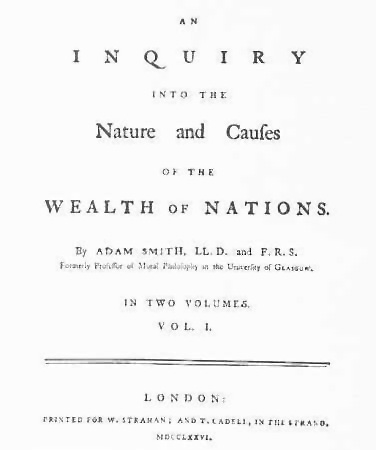
The Wealth of Nations was first published in 1776, during the Scottish Enlightenment, a period of significant intellectual and cultural growth in Scotland. Adam Smith, a Scottish philosopher and economist, drew on the ideas of thinkers like John Locke, David Hume, and François Quesnay to create a comprehensive theory of economic development. The book's central argument is that economic growth arises from the division of labor, which increases productivity and leads to greater prosperity. As noted by economists like Thomas Piketty and Joseph Stiglitz, The Wealth of Nations has had a profound impact on modern capitalism, influencing the development of economic systems in countries like the United States, the United Kingdom, and China.
💼 The Division of Labor and Economic Growth
The concept of the division of labor is a key component of The Wealth of Nations. Smith argues that by specializing in specific tasks, workers can become more efficient and productive, leading to increased economic output. This idea has been influential in the development of modern industries, from the manufacturing systems of Henry Ford to the software development methodologies of companies like Google and Amazon. The division of labor has also been studied by scholars like Karl Marx, who argued that it can lead to alienation and exploitation of workers, and by economists like Gary Becker, who have explored its implications for human capital and economic growth.
🌎 Global Trade and the Invisible Hand
The Wealth of Nations also explores the concept of global trade and the 'invisible hand' that guides economic activity. Smith argues that individuals acting in their own self-interest can lead to socially beneficial outcomes, such as increased economic growth and innovation. This idea has been influential in the development of modern trade policies, from the laissez-faire economics of the 19th century to the neoliberalism of the 20th century. Thinkers like Friedrich Hayek and Milton Friedman have built on Smith's ideas, arguing that free markets and limited government intervention are essential for economic prosperity. However, critics like John Kenneth Galbraith and Paul Krugman have argued that The Wealth of Nations neglects the role of power and inequality in shaping economic outcomes.
📊 Critiques and Legacy of The Wealth of Nations
Despite its significant influence, The Wealth of Nations has also been subject to various critiques and challenges. Some scholars, like Karl Polanyi, have argued that the book's emphasis on market forces neglects the importance of social and institutional factors in shaping economic activity. Others, like Joseph Schumpeter, have argued that Smith's ideas are too focused on static economic equilibrium, and neglect the role of innovation and entrepreneurship in driving economic growth. Nevertheless, The Wealth of Nations remains a foundational text in modern economics, and its ideas continue to shape economic policy and debate around the world, from the World Bank and the International Monetary Fund to the European Union and the United States Federal Reserve.
Key Facts
- Year
- 1776
- Origin
- Scotland
- Category
- history
- Type
- concept
Frequently Asked Questions
What is the main argument of The Wealth of Nations?
The main argument of The Wealth of Nations is that economic growth arises from the division of labor, which increases productivity and leads to greater prosperity.
Who is the author of The Wealth of Nations?
The author of The Wealth of Nations is Adam Smith.
What is the concept of the 'invisible hand'?
The concept of the 'invisible hand' refers to the idea that individuals acting in their own self-interest can lead to socially beneficial outcomes, such as increased economic growth and innovation.
How has The Wealth of Nations influenced modern economics?
The Wealth of Nations has had a profound impact on modern economics, influencing the development of economic systems in countries like the United States, the United Kingdom, and China, and shaping the ideas of economists like Karl Marx, John Maynard Keynes, and Milton Friedman.
What are some of the critiques of The Wealth of Nations?
Some of the critiques of The Wealth of Nations include the argument that it neglects the role of power and inequality in shaping economic outcomes, and that it is too focused on static economic equilibrium, neglecting the role of innovation and entrepreneurship in driving economic growth.