
Summary
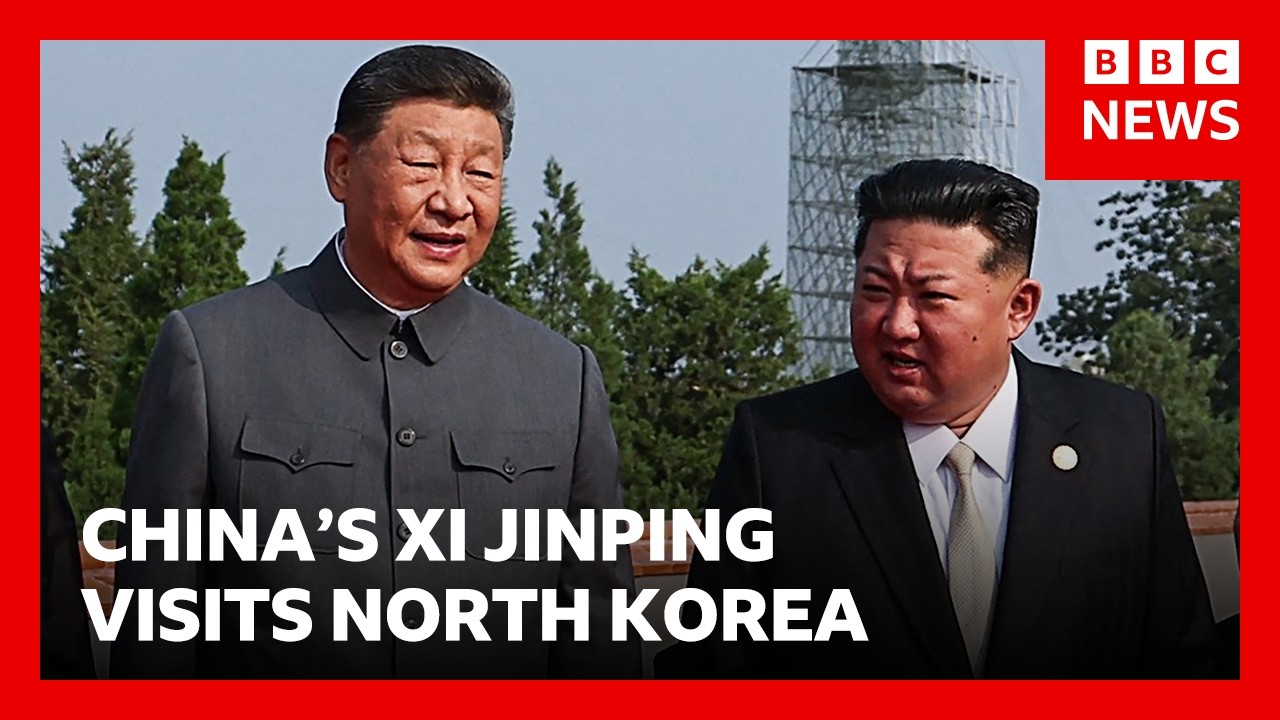
Chinese President **Xi Jinping** and North Korean leader **Kim Jong Un** have publicly reaffirmed their commitment to deepening bilateral cooperation, underscoring a strategic alignment between the two nations. This renewed emphasis on their alliance comes at a critical juncture, with both countries facing increasing international scrutiny and sanctions. The leaders' exchange of messages highlights a shared desire to bolster economic and political ties, potentially impacting regional stability and global power dynamics. This development signals a strengthening of the [[china|China]]-[[north-korea|North Korea]] relationship, a partnership with deep historical roots and significant geopolitical implications for [[east-asia|East Asia]]. The renewed commitment to cooperation is seen by analysts as a strategic move to counter external pressures, particularly from the [[united-states|United States]] and its allies. While specific details of enhanced cooperation remain scarce, the messaging from both capitals suggests a coordinated effort to present a united front. This alignment could have far-reaching consequences for international diplomacy and security in the region, particularly concerning [[north-korean-nuclear-program|North Korea's nuclear program]] and [[china-us-relations|China-US relations]].
Key Takeaways
- Xi Jinping and Kim Jong Un have reaffirmed their commitment to deepen China-North Korea cooperation.
- The leaders exchanged messages, signaling a strategic alignment amidst global pressures.
- This development highlights the enduring historical ties between the two nations.
- The specific nature and extent of future cooperation remain unconfirmed.
- The alliance has significant implications for regional security and international diplomacy.
Balanced Perspective
The reaffirmation of cooperation between **Xi Jinping** and **Kim Jong Un** is a predictable diplomatic maneuver, reflecting the long-standing strategic partnership between **China** and **North Korea**. The messaging emphasizes mutual support and shared interests, but concrete actions and the extent of future collaboration remain to be seen. This development is consistent with historical patterns of Sino-North Korean relations, particularly during periods of heightened international tension, and its actual impact will depend on specific policy implementations and geopolitical responses.
Optimistic View
This deepening of ties between **China** and **North Korea** represents a pragmatic geopolitical realignment, offering **North Korea** a crucial lifeline against Western sanctions and isolation. For **China**, it secures a vital buffer state and strengthens its position against American influence in the region, potentially leading to a more multipolar world order where Beijing plays a dominant role. The increased cooperation could also foster economic development in the impoverished North, improving the lives of its citizens and reducing regional instability.
Critical View
The intensified alliance between **China** and **North Korea** poses a significant threat to international security, emboldening **North Korea**'s provocative behavior and potentially undermining global non-proliferation efforts. **China**'s continued support provides **Kim Jong Un** with the resources and political cover to advance his nuclear and missile programs, further destabilizing [[east-asia|East Asia]]. This consolidation of power between two authoritarian states could also lead to increased human rights abuses and further isolation from the international community, creating a dangerous bloc resistant to democratic norms.
Source
Originally reported by AP News