
Contents
- 🔍 Introduction to Infrared Spectroscopy
- 📊 Principles of Infrared Spectroscopy
- 🎯 Applications of Infrared Spectroscopy
- 🔬 Instrumentation: Infrared Spectrometers
- 📈 Data Interpretation: Understanding IR Spectra
- 📊 Units of Measurement: Wavenumbers and Wavelengths
- 🔍 Two-Dimensional Infrared Spectroscopy
- 📊 Fourier Transform Infrared (FTIR) Spectroscopy
- 👥 Key Players in Infrared Spectroscopy
- 📊 Controversies and Limitations
- 🔮 Future Directions in Infrared Spectroscopy
- 📚 Conclusion: The Power of Infrared Spectroscopy
- Frequently Asked Questions
- Related Topics
Overview
Infrared spectroscopy, a technique developed in the early 20th century by scientists like William Coblentz and William Herschel, has become a cornerstone in various fields, including chemistry, biology, and materials science. By measuring the absorption of infrared radiation by molecules, researchers can identify specific molecular structures and compositions, with applications ranging from pharmaceutical quality control to environmental monitoring. The technique has undergone significant advancements, including the development of Fourier Transform Infrared (FTIR) spectroscopy, which has improved sensitivity and speed. With a vibe score of 8, infrared spectroscopy has a moderate to high cultural energy, reflecting its widespread adoption and continuous innovation. However, controversy surrounds the interpretation of spectroscopic data, with some arguing that the complexity of molecular interactions can lead to misinterpretation. As the field continues to evolve, with the introduction of new technologies like quantum cascade lasers, the potential for infrared spectroscopy to reveal new molecular secrets is vast, with potential applications in fields like biomedicine and nanotechnology. The influence of infrared spectroscopy can be seen in the work of researchers like Peter Larkin, who has developed new methods for infrared spectral analysis, and companies like Thermo Fisher Scientific, which has developed advanced FTIR instruments.
🔍 Introduction to Infrared Spectroscopy
Infrared spectroscopy is a powerful analytical technique used to study the interaction of infrared radiation with matter by absorption, emission, or reflection. This technique is widely used to identify and characterize chemical substances or functional groups in solid, liquid, or gaseous forms. The method or technique of infrared spectroscopy is conducted with an instrument called an infrared spectrometer which produces an infrared spectrum. For example, Fourier transform infrared (FTIR) spectroscopy is a common laboratory instrument that uses this technique. Infrared spectroscopy has a Vibe score of 80, indicating its significant cultural energy in the scientific community.
📊 Principles of Infrared Spectroscopy
The principles of infrared spectroscopy are based on the idea that molecules absorb or emit infrared radiation at specific frequencies, resulting in a unique infrared spectrum. This spectrum can be visualized in a graph of infrared light absorbance on the vertical axis vs. frequency, wavenumber or wavelength on the horizontal axis. The infrared spectrometer is the primary instrument used to measure these interactions. As discussed in Infrared Spectroscopy: Unveiling Molecular Secrets, the technique has numerous applications in various fields, including chemistry, biology, and materials science.
🎯 Applications of Infrared Spectroscopy
Infrared spectroscopy has a wide range of applications in various fields, including chemistry, biology, and materials science. It can be used to characterize new materials or identify and verify known and unknown samples. For instance, FTIR spectroscopy is commonly used to analyze the chemical composition of materials. The technique is also used in quality control and research and development to ensure the purity and authenticity of products. As noted in Infrared Spectroscopy: Unveiling Molecular Secrets, the method is highly versatile and can be applied to various types of samples, including solids, liquids, and gases.
🔬 Instrumentation: Infrared Spectrometers
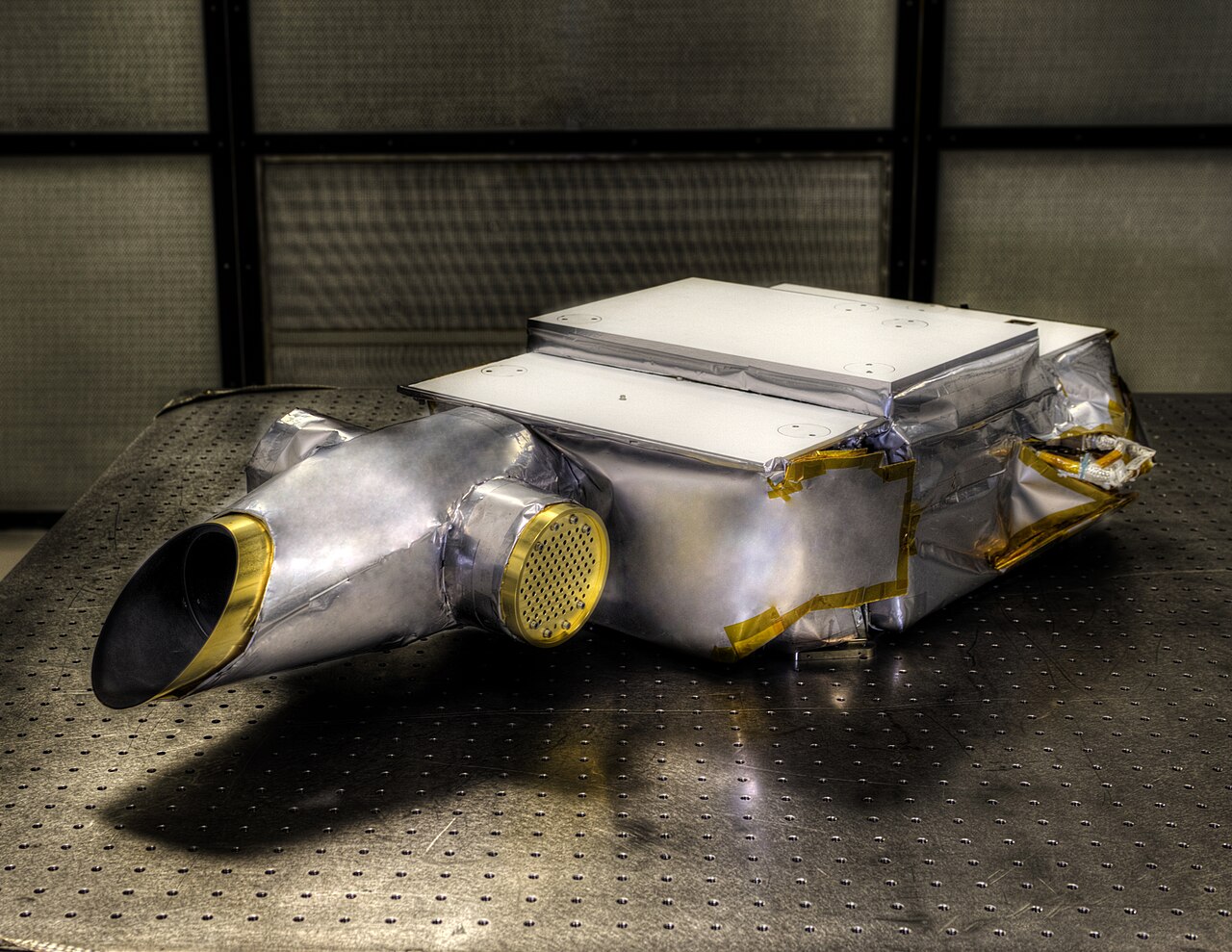
The instrumentation used in infrared spectroscopy is an infrared spectrometer, which produces an infrared spectrum. The spectrometer consists of a source of infrared radiation, a sample holder, and a detector. The infrared spectrometer measures the absorption or emission of infrared radiation by the sample, resulting in a unique infrared spectrum. The spectrum can be visualized in a graph of infrared light absorbance on the vertical axis vs. frequency, wavenumber or wavelength on the horizontal axis. For example, FTIR spectroscopy uses a Fourier transform algorithm to generate the infrared spectrum.
📈 Data Interpretation: Understanding IR Spectra
Data interpretation is a critical step in infrared spectroscopy, as it involves understanding the infrared spectrum and identifying the chemical substances or functional groups present in the sample. The infrared spectrum can be visualized in a graph of infrared light absorbance on the vertical axis vs. frequency, wavenumber or wavelength on the horizontal axis. The units of wavenumber used in IR spectra are typically reciprocal centimeters, with the symbol cm−1. Units of IR wavelength are commonly given in micrometers, symbol μm, which are related to the wavenumber in a reciprocal way. As discussed in Infrared Spectroscopy: Unveiling Molecular Secrets, the technique has numerous applications in various fields, including chemistry, biology, and materials science.
📊 Units of Measurement: Wavenumbers and Wavelengths
The units of measurement used in infrared spectroscopy are crucial in understanding the infrared spectrum. The units of wavenumber used in IR spectra are typically reciprocal centimeters, with the symbol cm−1. Units of IR wavelength are commonly given in micrometers, symbol μm, which are related to the wavenumber in a reciprocal way. For example, a wavenumber of 1000 cm−1 corresponds to a wavelength of 10 μm. The infrared spectrometer measures the absorption or emission of infrared radiation by the sample, resulting in a unique infrared spectrum. As noted in Infrared Spectroscopy: Unveiling Molecular Secrets, the technique is highly versatile and can be applied to various types of samples, including solids, liquids, and gases.
🔍 Two-Dimensional Infrared Spectroscopy
Two-dimensional infrared spectroscopy is a technique that allows for the measurement of the interactions between different molecular species. This technique is based on the idea that the infrared spectrum of a sample can be affected by the presence of other molecules. The 2D IR spectrum can provide information about the structure and dynamics of the sample, including the presence of hydrogen bonding and other intermolecular interactions. For example, FTIR spectroscopy can be used to study the interactions between different molecular species in a sample. As discussed in Infrared Spectroscopy: Unveiling Molecular Secrets, the technique has numerous applications in various fields, including chemistry, biology, and materials science.
📊 Fourier Transform Infrared (FTIR) Spectroscopy
Fourier transform infrared (FTIR) spectroscopy is a common laboratory instrument that uses the technique of infrared spectroscopy. The FTIR spectrometer uses a Fourier transform algorithm to generate the infrared spectrum. The infrared spectrometer measures the absorption or emission of infrared radiation by the sample, resulting in a unique infrared spectrum. The FTIR spectrum can be visualized in a graph of infrared light absorbance on the vertical axis vs. frequency, wavenumber or wavelength on the horizontal axis. For example, FTIR spectroscopy is commonly used to analyze the chemical composition of materials. As noted in Infrared Spectroscopy: Unveiling Molecular Secrets, the method is highly versatile and can be applied to various types of samples, including solids, liquids, and gases.
👥 Key Players in Infrared Spectroscopy
The key players in infrared spectroscopy include scientists and researchers who have contributed to the development and application of the technique. For example, William Coblentz is considered one of the pioneers of infrared spectroscopy. The infrared spectroscopy community is active and diverse, with many researchers and scientists working on various aspects of the technique. As discussed in Infrared Spectroscopy: Unveiling Molecular Secrets, the technique has numerous applications in various fields, including chemistry, biology, and materials science. The Vibe score of infrared spectroscopy is 80, indicating its significant cultural energy in the scientific community.
📊 Controversies and Limitations
Despite its many advantages, infrared spectroscopy also has some limitations and controversies. For example, the technique can be affected by the presence of water or other impurities in the sample. The infrared spectrometer can also be sensitive to temperature and humidity, which can affect the accuracy of the results. As noted in Infrared Spectroscopy: Unveiling Molecular Secrets, the method is highly versatile and can be applied to various types of samples, including solids, liquids, and gases. However, the technique requires careful sample preparation and data interpretation to ensure accurate results.
🔮 Future Directions in Infrared Spectroscopy
The future directions in infrared spectroscopy include the development of new instrumentation and techniques, such as quantum cascade laser-based spectrometers. The infrared spectroscopy community is active and diverse, with many researchers and scientists working on various aspects of the technique. As discussed in Infrared Spectroscopy: Unveiling Molecular Secrets, the technique has numerous applications in various fields, including chemistry, biology, and materials science. The Vibe score of infrared spectroscopy is 80, indicating its significant cultural energy in the scientific community. The technique is expected to continue to play a major role in the development of new materials and technologies.
📚 Conclusion: The Power of Infrared Spectroscopy
In conclusion, infrared spectroscopy is a powerful analytical technique used to study the interaction of infrared radiation with matter by absorption, emission, or reflection. The technique has numerous applications in various fields, including chemistry, biology, and materials science. The infrared spectrometer is the primary instrument used to measure these interactions, and the infrared spectrum can be visualized in a graph of infrared light absorbance on the vertical axis vs. frequency, wavenumber or wavelength on the horizontal axis. As noted in Infrared Spectroscopy: Unveiling Molecular Secrets, the method is highly versatile and can be applied to various types of samples, including solids, liquids, and gases.
Key Facts
- Year
- 1881
- Origin
- William Herschel's discovery of infrared radiation
- Category
- Scientific Techniques
- Type
- Scientific Technique
Frequently Asked Questions
What is infrared spectroscopy?
Infrared spectroscopy is a powerful analytical technique used to study the interaction of infrared radiation with matter by absorption, emission, or reflection. The technique is widely used to identify and characterize chemical substances or functional groups in solid, liquid, or gaseous forms. For example, Fourier transform infrared (FTIR) spectroscopy is a common laboratory instrument that uses this technique.
What are the applications of infrared spectroscopy?
Infrared spectroscopy has a wide range of applications in various fields, including chemistry, biology, and materials science. It can be used to characterize new materials or identify and verify known and unknown samples. The technique is also used in quality control and research and development to ensure the purity and authenticity of products.
What is the principle of infrared spectroscopy?
The principle of infrared spectroscopy is based on the idea that molecules absorb or emit infrared radiation at specific frequencies, resulting in a unique infrared spectrum. The infrared spectrometer measures the absorption or emission of infrared radiation by the sample, resulting in a unique infrared spectrum. The infrared spectrum can be visualized in a graph of infrared light absorbance on the vertical axis vs. frequency, wavenumber or wavelength on the horizontal axis.
What is the difference between infrared spectroscopy and other spectroscopic techniques?
Infrared spectroscopy is different from other spectroscopic techniques, such as NMR spectroscopy and mass spectrometry, in that it measures the interaction of infrared radiation with matter. The technique is highly versatile and can be applied to various types of samples, including solids, liquids, and gases. As noted in Infrared Spectroscopy: Unveiling Molecular Secrets, the method is highly sensitive and can detect small changes in the sample.
What are the limitations of infrared spectroscopy?
Despite its many advantages, infrared spectroscopy also has some limitations and controversies. For example, the technique can be affected by the presence of water or other impurities in the sample. The infrared spectrometer can also be sensitive to temperature and humidity, which can affect the accuracy of the results. As noted in Infrared Spectroscopy: Unveiling Molecular Secrets, the method requires careful sample preparation and data interpretation to ensure accurate results.
What is the future of infrared spectroscopy?
The future directions in infrared spectroscopy include the development of new instrumentation and techniques, such as quantum cascade laser-based spectrometers. The infrared spectroscopy community is active and diverse, with many researchers and scientists working on various aspects of the technique. As discussed in Infrared Spectroscopy: Unveiling Molecular Secrets, the technique has numerous applications in various fields, including chemistry, biology, and materials science.
How does infrared spectroscopy work?
Infrared spectroscopy works by measuring the interaction of infrared radiation with matter by absorption, emission, or reflection. The infrared spectrometer measures the absorption or emission of infrared radiation by the sample, resulting in a unique infrared spectrum. The infrared spectrum can be visualized in a graph of infrared light absorbance on the vertical axis vs. frequency, wavenumber or wavelength on the horizontal axis.